When to Go, What to Expect: Your Month-by-Month Planning Guide to Victoria Falls
One Destination, Twelve Different Experiences
Here's something that surprises a lot of first-time visitors: Victoria Falls looks completely different depending on when you show up. In March, you might walk away drenched from spray before you even reach the viewpoint. In October, you might see sections of exposed rock face that are invisible six months earlier. The wildlife behaves differently. The activities available change. Even the light is different.
For American travelers making a significant investment in an international trip, understanding this variability isn't optional — it's the difference between a trip that meets expectations and one that exceeds them. Here's your full-year breakdown.
January – February: The Rains Are Coming
Water Level: Rising | Crowds: Low | Weather: Hot and Humid
The rainy season in Zambia runs roughly November through April, and by January the Zambezi is swelling steadily. The falls are impressive and growing, but the real drama is still building. January and February see relatively few tourists compared to peak season — prices reflect that, and the lack of crowds gives the whole experience a more personal feel.
The downside is practical: afternoon thunderstorms are common and can disrupt outdoor activities. The bush is lush and green, which is beautiful but makes wildlife harder to spot. Mosquito activity is higher, so prophylaxis and repellent are non-negotiable.
Best for: Budget travelers, photographers who want the green season look, travelers who prioritize elbow room over ideal conditions.
Visa Note for US Citizens: Americans need a visa to enter Zambia. The KAZA Univisa — available on arrival or online — covers both Zambia and Zimbabwe for around $50 and is valid for 30 days. It's straightforward and well worth getting if you plan to cross the border at any point.
March – May: The Thunder Is Loudest
Water Level: Peak | Crowds: Moderate | Weather: Hot, Wet, Then Cooling
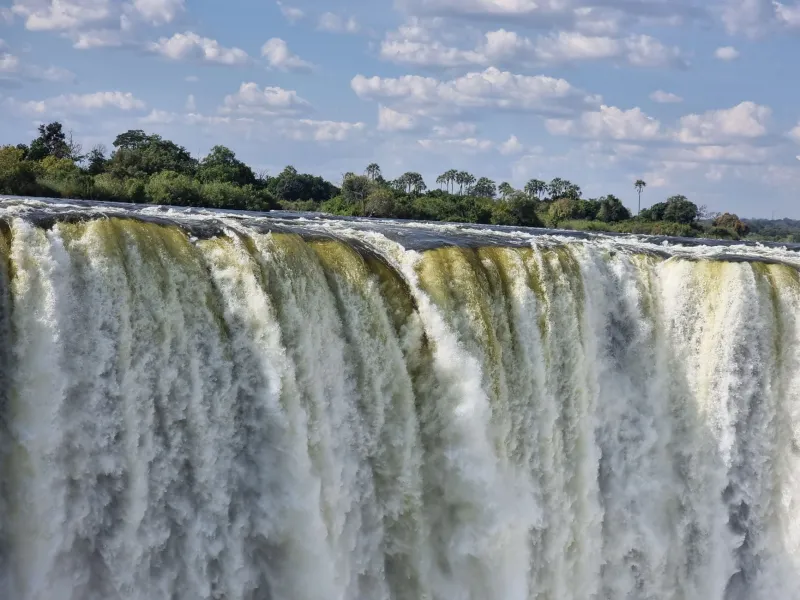
This is when Victoria Falls earns its Kololo name — Mosi-oa-Tunya, "the smoke that thunders." The Zambezi reaches its maximum flow somewhere between March and May, and the spray cloud can rise hundreds of feet into the air, visible from miles away. The roar is genuinely physical — you feel it in your chest before you hear it.
Standing at the viewpoints during peak flow is an all-consuming sensory experience. You will get soaked. Completely, thoroughly soaked. Ponchos help somewhat. Waterproof bags for your phone and camera are essential.
The tradeoff is visibility. The spray is so intense during peak flow that some viewpoints are essentially walls of white mist. You're experiencing the power of the falls more than you're seeing them. For some travelers, that's exactly what they came for. Others find it frustrating.
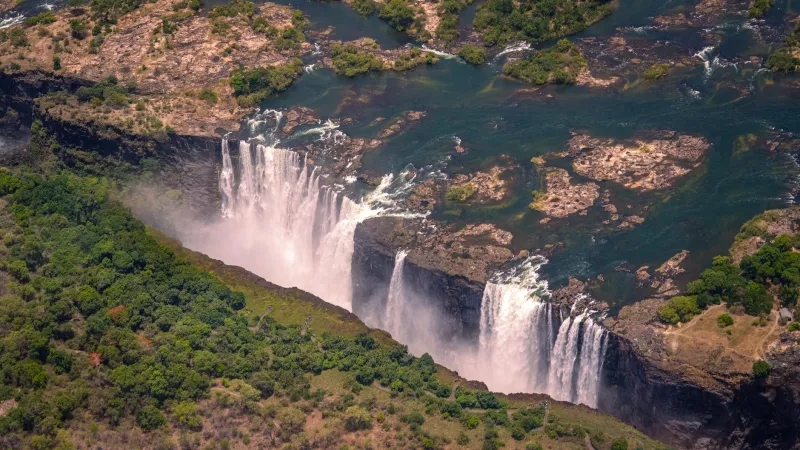
Rafting is typically unavailable or limited during highest water (the rapids get too dangerous even for commercial operators). Devil's Pool is closed. But helicopter flights are spectacular — you rise above the spray cloud and see the full width of the falls from above.
Best for: Travelers who want the maximum sensory experience, helicopter enthusiasts, those who aren't bothered by limited visibility.
Accommodation tip: The spray reaches some lodges near the falls. Check whether your chosen property has covered outdoor areas if you want to enjoy the surroundings without getting wet at your own hotel.
June – August: The Sweet Spot
Water Level: High to Moderate | Crowds: High (Peak Season) | Weather: Dry and Mild
If you want to know when most experienced travelers book their Victoria Falls trips, this is it. The dry season brings clear skies, cooler temperatures (nights can dip into the 50s°F), and the ideal balance of water volume and visibility. The falls are still running strong, the spray is dramatic but not blinding, and the full width of the gorge is visible from most viewpoints.
Wildlife activity increases significantly as animals concentrate around water sources. The Zambezi and surrounding national parks come alive in a way that's harder to see during the wet season. Game drives and walking safaris in Mosi-oa-Tunya National Park are excellent.
The catch: this is peak season, and it shows. Accommodation prices are at their highest, popular activities book out weeks in advance, and the viewpoints are more crowded than at any other time of year. Plan and book early — ideally three to six months ahead for the best lodges and most sought-after activity slots.
Best for: First-timers who want the most reliable overall experience, wildlife enthusiasts, families.
US traveler note: June–August aligns with summer vacation in the US, which means demand from American travelers is particularly high. If you're flexible on exact dates, consider the shoulder weeks at the very beginning of June or end of August.
September – October: Adventure Season Peaks
Water Level: Low to Very Low | Crowds: Moderate | Weather: Hot (Very Hot)
September and October are the hottest months of the year at Victoria Falls — temperatures regularly push past 100°F in October. It's not for everyone. But for adventure travelers, this period has a serious argument for being the best time to visit.
Low water means the full rapid sequence on the Zambezi is open and running at its most technical. Rafting operators consider this prime season. Devil's Pool is accessible and at its most swimmable. Kayaking on the upper river is excellent. The gorge trails are dry and navigable.
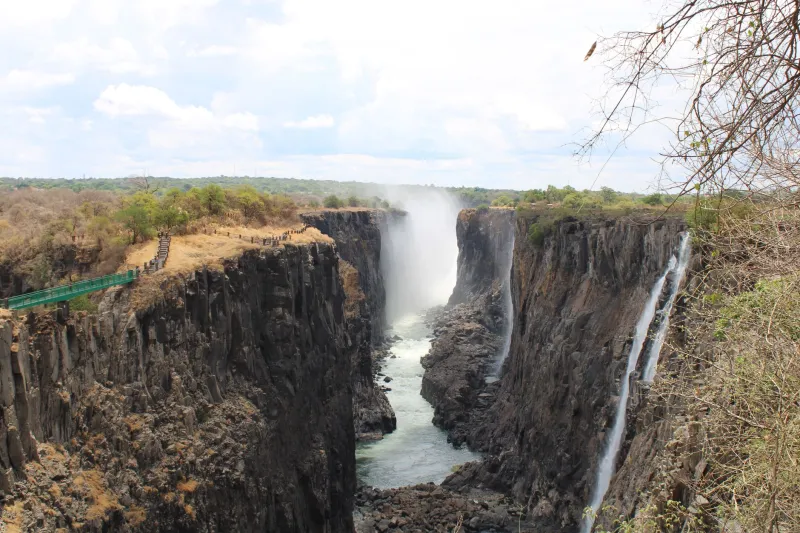
The falls themselves are significantly reduced — in some years, sections of the eastern cataract run dry entirely. If your primary goal is seeing the falls at maximum drama, September and October will disappoint. If your primary goal is doing things, this is your window.
Wildlife viewing is exceptional — water sources are scarce, so animals concentrate near the river in large numbers. Elephant herds come to drink, predators follow, and the bush is open enough to see them clearly.
Best for: Adventure travelers, rafting enthusiasts, serious wildlife photographers, repeat visitors who've seen the falls at high water and want a different experience.
Accommodation tip: Many lodges offer lower rates in October despite the excellent conditions — the heat keeps some travelers away, which is genuinely their loss.
November – December: The Quiet Before the Storm
Water Level: Low to Rising | Crowds: Low | Weather: Warming, Early Rains
November marks the start of the wet season, but the rains typically don't arrive in earnest until late November or December. This shoulder period offers a genuinely underrated window — lower prices, smaller crowds, and conditions that are still quite good for most activities.
The falls are at their lowest, but the landscape is beginning to green up. Wildlife is still concentrated near water. Temperatures are hot but not yet at the October extreme. Devil's Pool is usually still accessible through early November.
December sees the holiday surge — prices jump and American and European travelers fill the lodges for Christmas and New Year's. If you're traveling in December, book as early as you possibly can.
Best for: Budget-conscious travelers, those who want a quieter experience, November travelers specifically.
Practical Logistics for US Travelers
Getting There: Most US travelers route through Johannesburg (OR Tambo International Airport) or Nairobi, with connecting flights to Harry Mwanga Nkumbula International Airport in Livingstone. Flight times from major US cities to Johannesburg run 16–18 hours. Budget a full travel day in each direction.
Visas: The KAZA Univisa covers Zambia and Zimbabwe and is the most convenient option for most visitors. Apply online in advance or obtain on arrival. US passport holders currently pay around $50.
Health: Yellow fever vaccination is recommended and may be required depending on your travel itinerary. Malaria prophylaxis is strongly advised year-round. Consult a travel medicine clinic at least four to six weeks before departure.
Currency: The Zambian Kwacha is the local currency, but US dollars are widely accepted in tourist areas. Carry small bills — $1 and $5 notes are useful for tips and small purchases.
Time Zone: Zambia runs on Central Africa Time (CAT), which is UTC+2. During US Eastern Standard Time, that's a 7-hour difference (6 hours during Eastern Daylight Time). Jet lag is real; build in a recovery day if your schedule allows.
The Bottom Line
There's no objectively wrong time to visit Victoria Falls — every season has something genuinely compelling to offer. But knowing what you're walking into, what'll be available, and what to prioritize changes everything about how you plan.
Book your accommodations and key activities well ahead of arrival. Check the lunar calendar for moonbow opportunities. Pack a poncho if you're coming March through May, and pack sunscreen and a hat if you're arriving in September or October.
The smoke is always thundering. The question is just how you want to experience it.