After the Thunder: Practical Ways to Keep the Victoria Falls Mindset Alive Back Home
You know the feeling. You're back. The laundry is waiting. Your inbox is a disaster. The dog is ecstatic to see you, which is nice, and then the dog goes to sleep and you're sitting in your kitchen at 10 p.m. surrounded by your completely ordinary life, and you can feel the Falls slipping away from you like water through your hands.
Post-vacation letdown is one of the most universally underacknowledged forms of mild grief. And when the trip in question was to somewhere as genuinely overwhelming as Victoria Falls — a place that can make you feel, for a few days, like you've finally tuned in to the correct frequency — the return to ordinary life can feel especially jarring.
But here's the thing: the clarity you felt at the Falls wasn't manufactured by the location. The Falls didn't install something in you. It removed something — the noise, the urgency, the constant low-grade pressure of your regular life — and let you feel what was already there. The challenge is learning to recreate those conditions, at least partially, without a plane ticket.
We talked to psychologists, travelers who've made the trip more than once, and a few people who've gotten genuinely good at this. Here's what actually works.
Accept That the Feeling Will Fade — and Plan for It Before You Leave
The single most effective thing you can do to preserve the Victoria Falls mindset is to take action while you're still there. Not later. Not when you get home. Now.
This sounds obvious and almost no one does it.
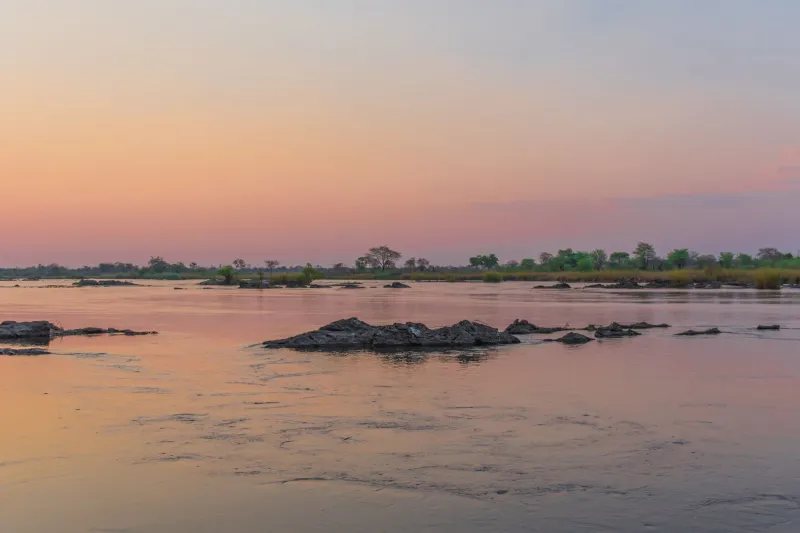
Before your last full day at the Falls, sit somewhere quiet — the Zambezi riverbank at sunset is a reliable choice — and write down three things. First: what you felt at the Falls that you don't feel at home. Second: what you want to do differently when you return. Third: one specific, concrete action you will take in the first week back.
The specificity is what matters. "Be more present" is not an action. "Call my dad on Sunday" is an action. "Block two hours on Wednesday to research the business idea I've been avoiding" is an action. The Falls gave you the window. You have to decide what you're going to do with it before the window closes.
Psychologists who study what's sometimes called the "fresh start effect" — the way transitions create genuine openings for behavioral change — note that the return from a significant trip is one of the strongest fresh-start triggers in adult life. That energy is most potent in the first week. Don't waste it on jet lag and grocery shopping.
Build a Sensory Anchor
One of the reasons the Victoria Falls experience is so hard to replicate at home is that it's fundamentally physical. The mist on your face. The sound that registers in your chest before it registers in your ears. The way the ground seems to vibrate slightly at the closer viewpoints. Your nervous system was engaged in a way it rarely gets to be in daily American life.
You can't recreate the Falls in your living room. But you can build sensory anchors that reliably return you to something close to that state.
A lot of returning travelers swear by sound. The recordings of the Falls available online are surprisingly effective — not as background noise, but as a deliberate five-minute practice. Put on headphones, close your eyes, and give yourself permission to actually go back there mentally. This isn't escapism. It's a recognized technique in mindfulness practice, using sensory memory as an access point to a particular mental state.
Others use scent. The rainforest adjacent to the Falls has a specific smell — wet earth, green growth, something mineral from the spray — that's genuinely distinctive. If you're the type who responds strongly to scent, a diffuser blend of eucalyptus, petrichor, and green tea can function as a surprisingly effective trigger. It sounds a little out there. It works.
Find Your Local Version of Awe
Awe — the specific psychological state triggered by encountering something vast and beyond your full comprehension — is the active ingredient in the Victoria Falls experience. And while there's exactly one Victoria Falls, awe is not actually that scarce. We've just trained ourselves to stop looking for it.
National parks are the obvious answer, and they're a good one. The Grand Canyon, Niagara Falls, the Oregon Coast in a storm — these places can deliver genuine awe if you approach them with the same openness you brought to Zambia. The problem is we often visit them with the same distracted, phone-in-hand energy we bring to everything else.
The practice is this: once a month, go somewhere that is larger than you. Turn off your phone for at least two hours. Stand still. Let the place work on you instead of working the place for content.
Even within cities, awe is available. A clear night sky away from light pollution. A thunderstorm watched from a safe porch. A river in flood. The ocean at any time of year. The key is the posture of attention — open, unhurried, willing to be small.
Protect the Pace
One of the subtler gifts of a Victoria Falls trip is the pace. Days organized around sunrise boat rides, long walks through the rainforest, and unhurried dinners watching the sun drop over the Zambezi operate at a rhythm that most of us have completely lost access to in our regular lives.
You won't keep all of it. But you can protect some of it.
Digital wellness coaches who work with high-performing professionals often recommend what they call a "slow morning" practice — a first hour after waking that belongs entirely to you, with no screens, no news, no email. The Falls version of this is to spend that hour doing something that requires your full sensory attention: cooking an actual breakfast, sitting outside regardless of weather, going for a walk with no destination.
The goal isn't to pretend you're back in Zambia. It's to remember that the pace you lived at there is a pace your nervous system is capable of. It doesn't require a different continent. It requires a different decision.
Plan the Return Trip
This one is practical and also a little psychological.
Having a next trip on the calendar — even a distant, aspirational one — changes the way you relate to your everyday life. You're not just surviving until the next vacation. You're actively building toward something.
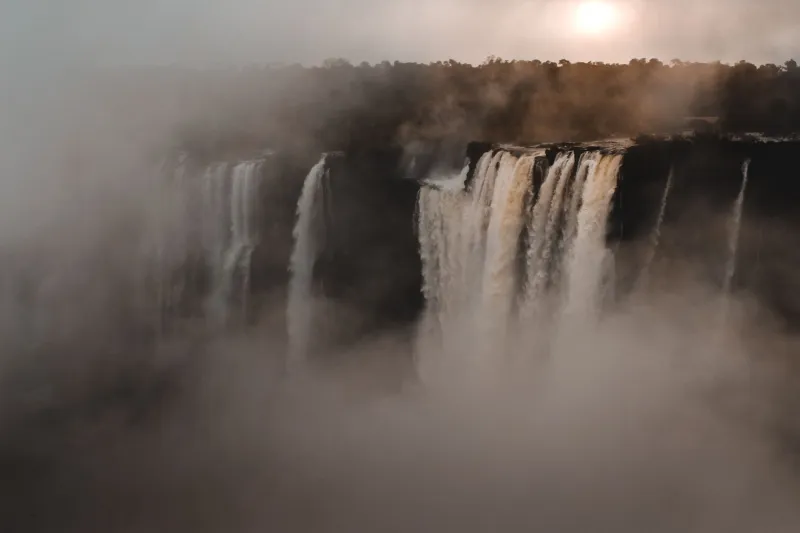
Victoria Falls is the kind of place that rewards return visits. The Falls look completely different depending on the season. The high-water months (March through May) produce the full, thundering wall of water that fills every photograph. The low-water months (September through December) reveal the geology beneath — the basalt gorges, the rock formations, the calmer upper Zambezi. Returning visitors often say the second trip is even more powerful than the first, because they arrive knowing what to expect and can give themselves fully to it.
Book the next trip. Put it on the calendar. Let it pull you forward.
The Smoke That Thunders isn't going anywhere. And neither, if you do this right, is the part of you it woke up.