The Living Rainforest Hidden Inside Victoria Falls
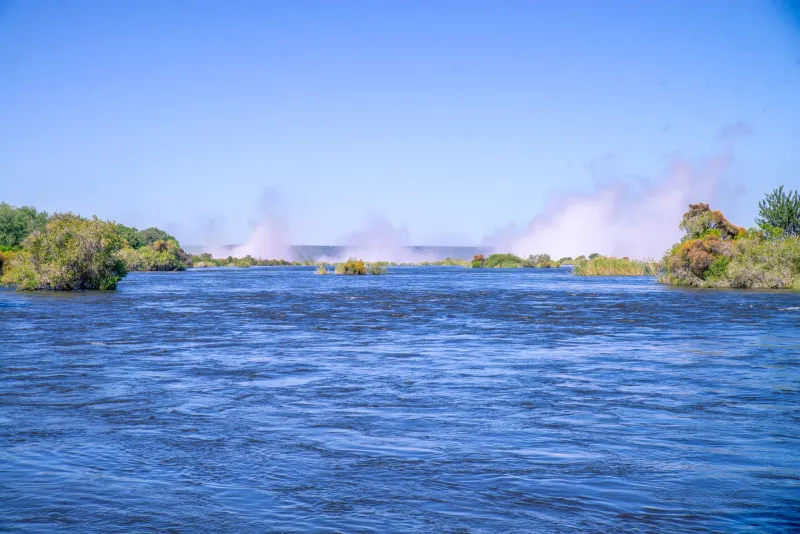
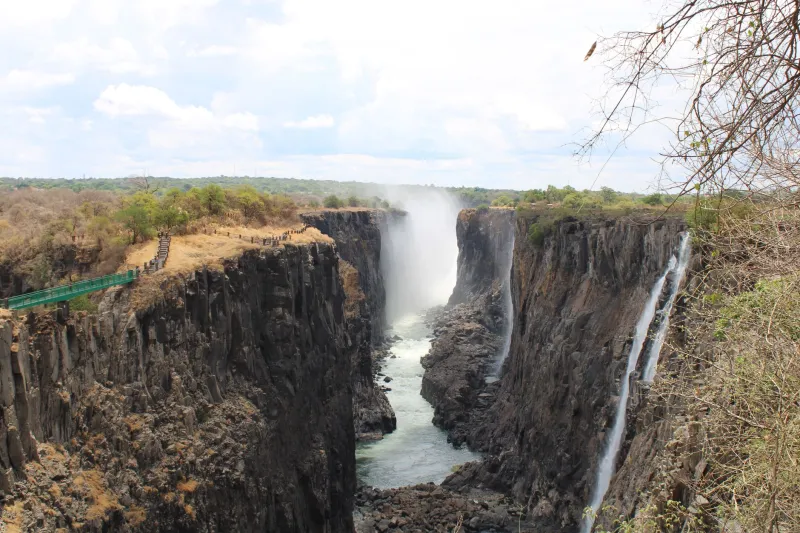
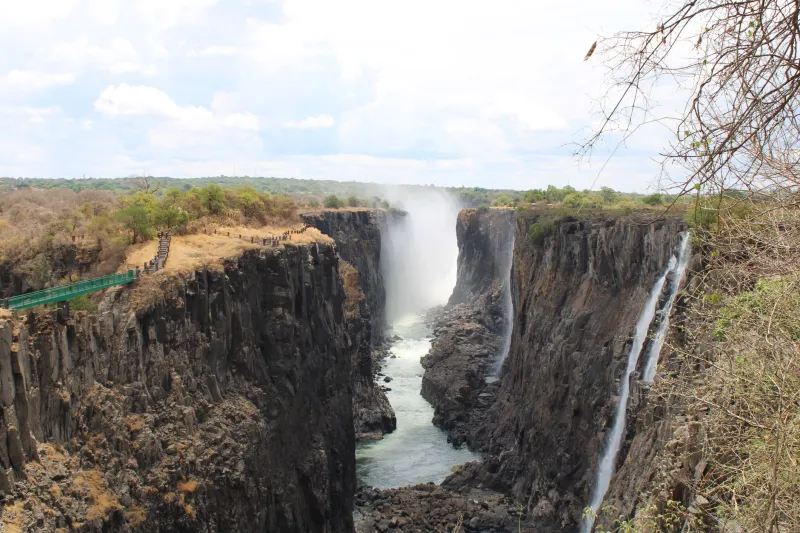
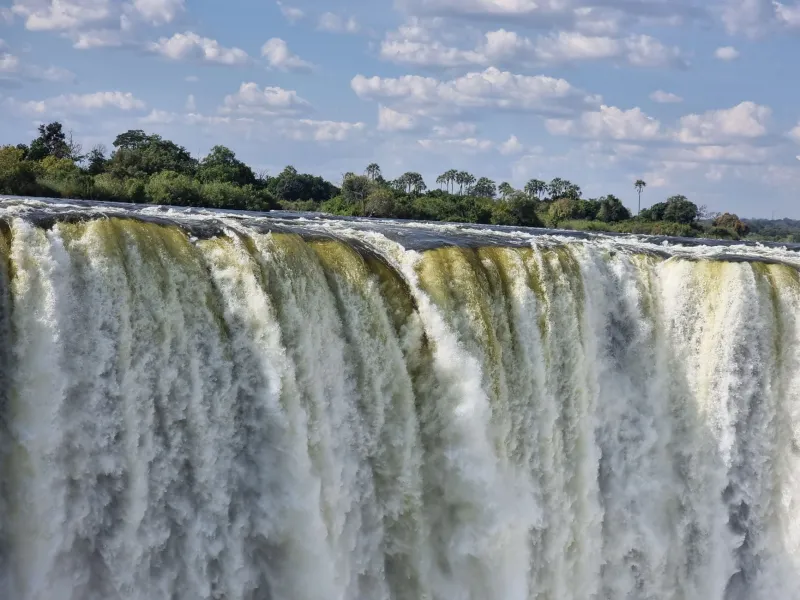
You've seen the photos. A wall of white water, a rising column of mist visible from miles away, a rainbow arcing over the gorge on a sunny afternoon. Victoria Falls delivers all of that — every single time. But here's something the photos almost never capture: the moment you step into the spray zone and realize you're not just standing near a waterfall. You're walking through a living, breathing rainforest that has no business existing in the middle of the southern African savanna.
This isn't a metaphor. It's ecology.
A Microclimate That Defies Its Surroundings
The landscape around Victoria Falls is classic miombo woodland and dry savanna — the kind of terrain you'd expect to find in Zambia's interior. Sparse trees, dry grasses, long stretches of red laterite soil baking under an unforgiving sun. For much of the year, the region receives rainfall only during the wet season, roughly November through April.
And then there's the spray zone.
The mist generated by Victoria Falls — locally called Mosi-oa-Tunya, meaning "The Smoke That Thunders" — rises up to 1,600 feet into the air during peak flow. It drifts across a roughly two-mile radius, depositing moisture continuously, day and night, 365 days a year. Within that zone, the effective rainfall isn't measured in inches per year. It's measured in inches per day.
The result is a permanently saturated microclimate — a pocket of near-rainforest conditions surrounded by dry savanna on all sides. Temperatures within the spray zone are also notably cooler and more stable than the surrounding landscape, creating a refuge that operates by entirely different ecological rules.
Plants That Only Exist Because of the Falls
Step into the mist on the Zambian side and the vegetation changes almost immediately. The dry scrub gives way to dense, dripping greenery — fig trees, wild date palms, African ebony, and a tangle of ferns and mosses that would look more at home in a Costa Rican cloud forest than in southern Africa.
Several plant species found here exist in highly restricted ranges, meaning they grow here and in only a handful of other places on the continent. Some are found only in this specific spray zone — what botanists call narrow endemic species. The combination of constant moisture, filtered light, and the unique mineral composition of the mist-fed soil has created conditions that allowed these plants to diverge from their relatives over thousands of years.
One of the most striking features is the fern population. Ferns require consistent moisture to reproduce, making them essentially impossible to sustain in the surrounding savanna. Inside the spray zone, they carpet the ground and cling to rocks in thick, prehistoric-looking mats. Walking through them feels less like a nature trail and more like stepping back about 300 million years.
Wildlife That Follows the Water
Where plants thrive, animals follow — and the spray zone attracts a surprisingly diverse cast of characters.
The moist, insect-rich environment draws an impressive variety of birds, including several species that wouldn't typically be found in dry savanna habitats. Birders visiting Victoria Falls are often surprised to spot species more commonly associated with riverine forest and wetland ecosystems, all concentrated within a relatively small area because of the microclimate the falls create.
Butterflies are another unexpected highlight. The spray zone supports a density and diversity of butterfly species that draws dedicated lepidopterists from around the world. The moisture supports the flowering plants and larval host plants that butterfly populations depend on, creating a year-round breeding environment that the surrounding landscape simply can't offer.
Smaller mammals, reptiles, and amphibians round out the picture. Chameleons move slowly through the undergrowth. Frogs call from the saturated leaf litter. Monitor lizards patrol the margins between the spray zone and the drier woodland beyond. It's a genuine transition zone — an ecological edge where two completely different worlds meet and overlap.
Why UNESCO Cares About More Than the View
Victoria Falls was designated a UNESCO World Heritage Site in 1989, and while the sheer visual drama of the falls played a role in that recognition, the ecological significance of the site was equally important to the designation.
UNESCO's criteria for natural sites specifically highlight outstanding examples of ongoing ecological and biological processes, and the spray zone ecosystem checks that box definitively. The falls aren't just a geological feature — they're an active driver of biodiversity, continuously creating and sustaining habitat that would vanish within years if the water flow were ever interrupted.
This makes the conservation of water resources upstream, in the Zambezi River basin, directly relevant to the survival of plant and animal species that live nowhere else on Earth. It's a reminder that protecting a natural wonder isn't just about preserving a view. It's about maintaining the processes that make the view worth having in the first place.
How to Actually Experience It
Here's the practical part, because knowing the ecology is one thing, but getting out there and walking through it is another.
The Zambian side of the falls offers trail access directly into the spray zone, and for much of the high-water season (roughly February through July), you will get absolutely soaked. This isn't a light misting — it's a sustained downpour. Bring a waterproof bag for your camera and phone, wear clothes you don't mind drenching, and consider leaving the good sneakers at the lodge. Sandals or water shoes are a better call.
If you want to take your time and actually observe the plants and wildlife rather than just push through to the viewpoints, go early in the morning. Foot traffic is lighter, the light is better for photography, and the bird activity peaks in the first few hours after sunrise. A local guide who knows the ecology of the spray zone can dramatically change what you notice — pointing out the endemic ferns, identifying the birds by call, and explaining the subtle transitions between plant communities as you move in and out of the mist.
For visitors who want a deeper dive, some of the lodges in the area can connect you with naturalist-led walks that focus specifically on the ecology of the falls rather than just the viewpoints. These tend to run a couple of hours and are well worth the time if you have any interest in what's actually living inside that cloud.
The Falls as a Living System
It's easy to treat Victoria Falls as a backdrop — something to stand in front of, photograph, and check off a list. And honestly, even experienced travelers sometimes don't look past the spectacle to what's happening at ground level.
But the spray zone ecosystem is one of those rare places that rewards attention. The more you look, the more you find. A colony of ferns on a dripping rock face. A butterfly species that exists nowhere else on the planet. A stand of trees that has no right to be growing in the middle of the African savanna and yet has been there, sustained by falling water, for longer than anyone can measure.
That's the thing about Mosi-oa-Tunya. The smoke thunders, yes. But if you listen carefully — and look closely at what's growing around your feet — it also whispers something a lot more interesting.