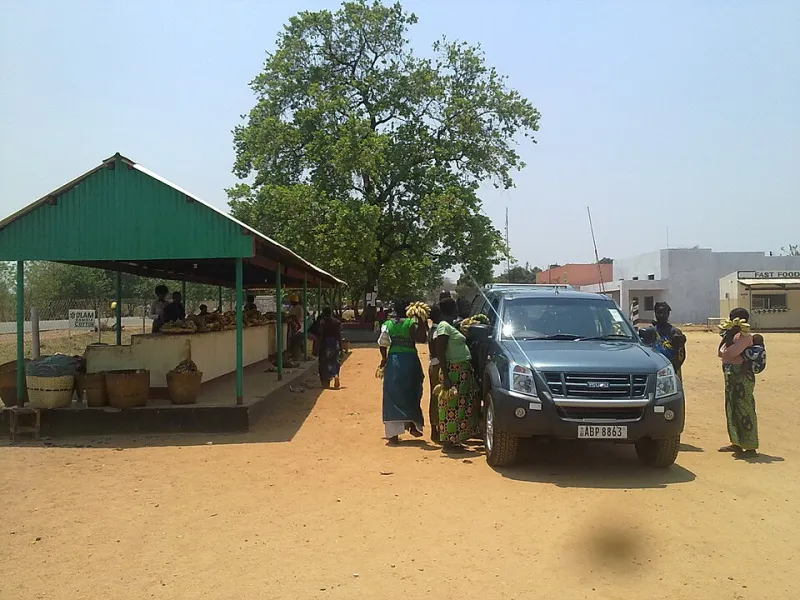
The Bag That Won't Let You Down: What to Actually Pack for Victoria Falls
Photo: Frederic Edwin Church, Public domain, via Wikimedia Commons
Most packing lists for Africa are built for a safari that ends at a watering hole. Victoria Falls is a different animal. You will spend part of your trip getting quietly soaked, part of it baking in 95-degree sun, and part of it walking on wet basalt that behaves like a skating rink. Pack for those three realities and the rest sorts itself out.
Start With the Weather Nobody Warns You About
The mist at Mosi-oa-Tunya is not rain, and that's the whole problem. Rain falls down. Mist comes at you sideways, in gusts, at 40 miles an hour, from a direction you can't predict. A cheap umbrella is useless and a $15 poncho from the gift shop will shred by noon.
What works: a lightweight, packable rain shell with a hood — the same one you'd take to Seattle in March. Bring one you don't love. It will smell like river by day three. A dry bag or two (10 to 20 liters) is the single best $25 you'll spend, and it doubles as a beach bag on the sunset cruise.
For clothing, think quick-dry and think layers. Cotton is a sponge. Athletic synthetics and merino dry in an hour and don't hold odor on a 15-hour travel day. One warm layer matters more than you'd expect — June and July mornings in Livingstone can start in the 40s Fahrenheit, and open-air game drive vehicles are cold at dawn.
Your Electronics Have One Enemy, and It Isn't Water
It's humidity. Fine mist gets into seams, condenses overnight, and your camera sensor fogs from the inside. Two things fix this: a sealed bag with a handful of silica packets, and the discipline to let cold gear warm up inside that bag before you open it in an air-conditioned room.
A waterproof phone pouch that hangs around your neck is worth the eight bucks. So is a microfiber cloth — actually bring three, because you'll lose two. If you're carrying a real camera, a rain cover beats a plastic bag, and a rocket blower earns its place at the falls where spray settles on your front element every 90 seconds.
One more: a small power bank. Load-shedding is less frequent than it used to be, but a lodge generator hiccup at 5 a.m. is not the moment you want a dead phone alarm.
Shoes: One Pair to Walk, One Pair to Get Soaked
Bring closed-toe shoes with actual tread for the rainforest trail on the Zambian side. The path is slick, shaded, and sprayed constantly, and flip-flops on that route are how people end up in the clinic in Livingstone with a sprained ankle. Trail runners or light hiking shoes are ideal.
Then bring a second pair of sandals or water shoes for rafting put-ins, boat launches, and the walk to the river. Two pairs is enough. Three is luggage you'll resent.
The Medicine Cabinet You'll Actually Use
See a travel doctor six to eight weeks out — that's the window for typhoid, hepatitis A, and a malaria prescription if you and your clinician decide it's right for you. The Livingstone area is a malaria zone, and prophylaxis is a conversation, not a default. If you go with doxycycline, know that it makes some people sun-sensitive, which is a real consideration when you're standing on a basalt cliff at noon.
Beyond that, a compact kit covers 95 percent of what happens:
- Rehydration salts (the heat is no joke, and they're cheap insurance)
- Blister bandages, because you will walk more than you planned
- Imodium and a probiotic
- Antihistamine — mist, pollen, and dust all conspire
- Motion sickness tablets if a helicopter, microlight, or boat is on your schedule
- Your prescriptions in original labeled packaging, plus photos of the labels on your phone
Plugs, Cash, and the Small Stuff That Trips People Up
Zambia runs 230 volts at 50 hertz with type C, D, and G outlets. If your devices aren't dual-voltage (check the fine print on the charger brick), you need a converter, not just a plug adapter. A universal adapter plus a small three-outlet power strip is the traveler's cheat code — one outlet becomes four, and you're not fighting your roommate over the last USB port.
On money: bring U.S. dollars, and bring clean ones. Unmarked bills issued in 2013 or later are what lodges, transfer drivers, and tour operators prefer; torn or heavily creased notes get refused and there's no polite way to argue about it. Carry smaller denominations for tips. Pull kwacha from an ATM in Livingstone for markets and small vendors, and treat your backup card like a lifeline — let your bank know you're traveling before you leave.
The One Thing Almost Everyone Forgets
A hat that cannot leave your head.
The wind at the falls, on the bridge, and on the boats is real, and a loose-brimmed sun hat will be in the Zambezi before you finish your first photo. Bring something with a chin strap — a bucket hat, a technical cap, a wide-brim with a cord. Your face will thank you on day two when the sunscreen has worn off and the UV index is sitting at 12.
What to Leave at Home
Camouflage anything. Zambia restricts camo clothing for civilians, and it's an avoidable hassle at a checkpoint.
Drones. Permits are a genuine bureaucratic project, and "I didn't know" is not a defense.
Jeans. You'll wear them once and regret it.
A hard-shell suitcase. You're going to be on gravel roads and in the back of a Land Cruiser. Soft-sided luggage is kinder to everyone, including the guy lifting it onto the roof.
Single-use plastic bags. Zambia has moved against thin plastic carrier bags; bring a couple of reusable totes instead.
And finally: the fourth pair of shoes, the second camera body, and the "just in case" formal outfit. Victoria Falls is casual. Nobody has ever regretted packing lighter, but plenty of people have regretted hauling a 50-pound bag through three airports and a charter flight.
Pack the shell, the dry bag, the grippy shoes, and the hat with the strap. Everything else is a rounding error.