When the Zambezi Turns It Up: Picking Your Month for Victoria Falls
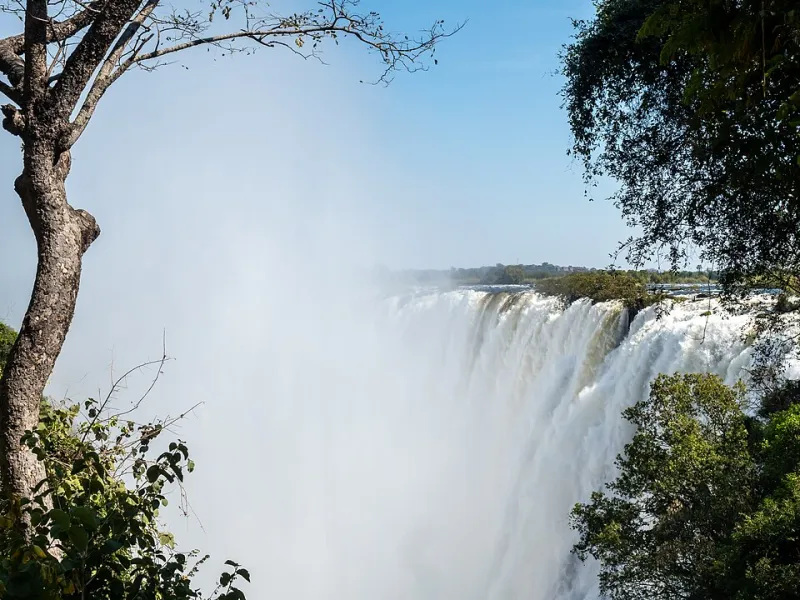
Photo: Matti Blume, CC BY-SA 4.0, via Wikimedia Commons
There is no such thing as Victoria Falls in general. There is Victoria Falls in April, when the spray plume climbs high above the gorge and the rainforest walk turns into a car wash. And there is Victoria Falls in October, when the same cliff shows its bones, the river splits into channels, and you can stand in places that were underwater six months earlier.
Same waterfall. Two completely different vacations.
Here is how the Zambezi spends its year — and how to line your dates up with the version you actually want.
Start With Three Dials, Not One
Most timing advice treats water volume as the only variable. It is the loudest one, but it is not the only one you are adjusting. You are turning three dials at once:
Water. The Zambezi's flow at the Falls swings enormously between the wet and dry seasons. This is the difference between a white wall of mist and a bare basalt cliff with the river pouring through a handful of channels.
Heat. October and November in the Zambezi Valley are genuinely brutal at midday. June and July mornings will have you reaching for a fleece. Same country, opposite packing lists.
Crowds and price. Peak season is no secret. It lines up with the best-known water and weather, which means the most famous window is also the most crowded and most expensive one.
Decide which of those three you can live with, and the calendar sorts itself out fast.
January and February: The Giant Stirs
The rains have arrived, the river is filling, and the Falls are climbing toward their annual show. Spray starts thickening. Afternoon thunderstorms roll through with real authority. Roads in the national parks get sloppy, and some activities pause entirely.
This is the cheapest, quietest, and wettest version of the trip. If you are a photographer chasing moody light and you do not mind a poncho, it is underrated. If you want a classic sun-drenched safari add-on, it is not your window.
March and April: Peak Thunder
This is the moment the Zambezi goes full orchestra. Flow peaks somewhere in this stretch, and the Falls put on the display that made them famous — a spray column visible from miles out, a roar you feel in your chest, and a rainforest walk that functions as a free shower.
The catch is exactly what you would expect. You will get soaked. Views from the cliff-edge viewpoints can be partly swallowed by mist. Cameras need real protection. And everyone else on earth also booked these weeks.
Come here if the spectacle itself is the point. Skip it if you want to see the rock face and the geology underneath.
May, June, and July: The Uncontroversial Window
Flow is still strong, the rains have quit, skies are clean, and daytime temperatures are pleasant rather than punishing. Mornings on the river are cool enough to want a layer.
This is the safest recommendation in the entire calendar, and honestly, it earns that reputation. You get big water and clear light at the same time. You also get peak-season rates and company, especially in July when American summer break collides with European school holidays.
August and September: Clear Skies, Dropping Water
Flow slides steadily downward through this stretch, which is mostly good news for travelers. The mist thins, the viewpoints open up, and you can actually see the shape of the gorge rather than a wall of white.
Wildlife viewing on the river improves as water sources shrink elsewhere. Devil's Pool and Livingstone Island typically reopen once levels drop far enough, usually late in this window. Rafting comes into its own as the river becomes runnable top to bottom.
September is hot but manageable. By late in the month, the heat is starting to make its point.
October and November: Low Water, Big Heat, Best Access
This is the low-water window, and it is deeply misunderstood. Yes, the Falls are less dramatic. Some sections of cliff go bare. On the Zimbabwe side in particular, several viewpoints look at rock rather than water.
But look at what you gain: the Devils Pool swim, the full rafting run, walking access to parts of the gorge rim, and substantially softer hotel rates. The spray is light enough that your camera survives. And the crowds thin out noticeably once the heat sets in.
October specifically is the hottest month in the valley. Treat midday like a siesta and you will be fine. November brings the first rains, sticky humidity, and a gradual refill.
December: The Forgotten Month
Early December is still low water, still hot, and usually still quiet — right up until the holidays hit. If you have flexibility in the first half of the month, you can get low-water access at shoulder-season pricing. Late December is a different story: flights fill, lodges fill, and rates climb.
Matching Months to Real American Schedules
Practical beats poetic. Here is how the calendar maps onto the constraints most US travelers are actually working with.
Summer break, late June through August. You get big water, dry skies, and crowds. Book lodging six to nine months out. Expect to share every viewpoint.
Spring break, March or early April. You will hit peak flow. It is spectacular and soaking. Pack a dry bag and waterproof sandals, not sneakers.
Fall shoulder, late September through October. Arguably the best value play for adults without school calendars: cheaper rooms, better access, rafting at its best, and heat you can manage with an early start.
Thanksgiving week. A genuinely smart low-water window with cooler evenings than October and thinner crowds than December.
Christmas and New Year. High prices, high demand, low water. Doable, but book early and set expectations about the Falls themselves.
The One Question to Ask Yourself
Do you want to be overpowered, or do you want to get close?
High water overpowers. It is loud, wet, and humbling, and the photographs are atmospheric rather than crisp. Low water lets you in. You see structure, you get access, you swim and climb and walk in places that are otherwise inaccessible.
Both are legitimate reasons to fly across an ocean. The mistake is booking for one and expecting the other — then standing at the rim in November wondering where all the water went.
Pick your version first. Then pick your month.