Your Brain on Thunder: The Neuroscience of Standing at Victoria Falls
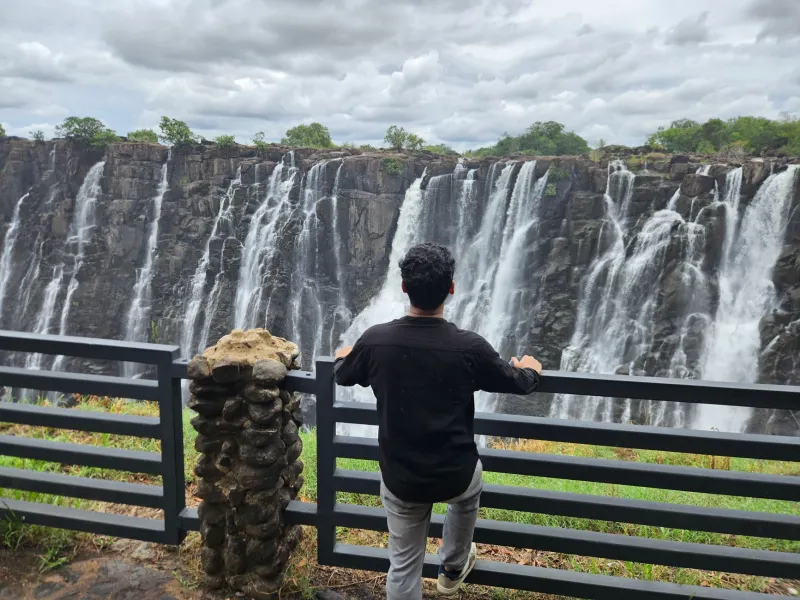
People come back from Victoria Falls different. Not in a vague, hard-to-articulate way — in a way their friends notice. They're calmer. More present. Less rattled by the stuff that used to send them spiraling. Ask them what happened and most of them will pause, shake their heads, and say something like, "I don't know how to explain it. I just stood there and everything kind of... reset."
That reset is real. And it's not mystical — though it might feel that way. Neuroscientists and environmental psychologists are building a growing body of research that helps explain exactly what happens inside the human brain when it encounters something as overwhelming, ancient, and sensory-saturating as Victoria Falls. The short version: your nervous system gets a full reboot. The longer version is a lot more fascinating.
The Sensory Overload That Actually Calms You Down
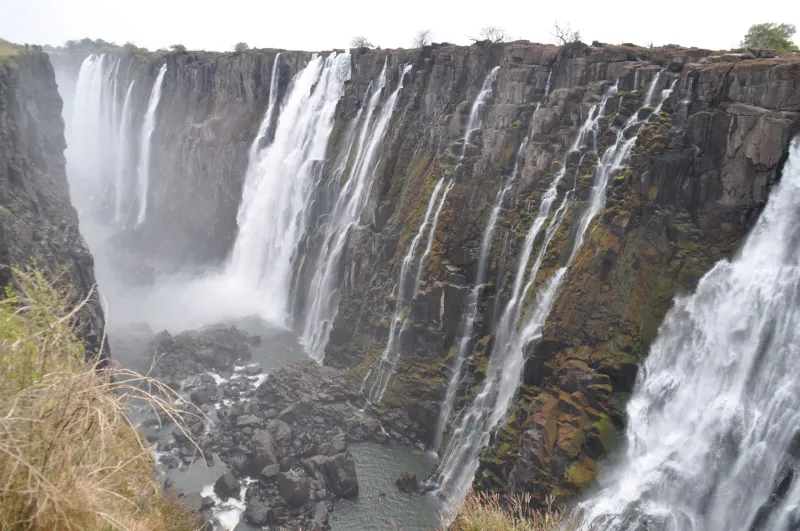
Here's the paradox at the center of the Victoria Falls experience. The falls are loud. The roar of over 500 million liters of water per minute crashing into the Batoka Gorge registers above 90 decibels during peak flow — roughly equivalent to standing next to a running lawnmower, but constant and enveloping. The mist soaks you before you even see the water. The ground beneath your feet vibrates. Your whole body is receiving input it has never processed before.
You'd expect that kind of sensory barrage to trigger anxiety. Instead, most visitors report the opposite.
Dr. Craig Anderson, a researcher who has studied awe and its psychological effects at UC Berkeley's Greater Good Science Center, has described how large-scale natural phenomena tend to activate what he calls a "quiet ego" response — a measurable drop in self-referential thinking, the kind of mental chatter that fuels anxiety and rumination. When the external world becomes genuinely overwhelming, the brain stops rehearsing your to-do list. It simply can't hold both.
At Victoria Falls, that effect is amplified by every sensory channel firing at once.
What the Roar Does to Your Cortisol
Cortisol is the hormone most associated with stress. Chronic elevation of cortisol — the kind that comes from deadline pressure, financial worry, or the relentless scroll of bad news — is linked to everything from poor sleep to cardiovascular disease. Bringing those levels down is the entire premise behind meditation apps, spa weekends, and the booming wellness industry.
Victoria Falls may do it faster than any of those.
Environmental psychologists have documented what's known as the "restorative environment" effect — the measurable reduction in cortisol and increase in parasympathetic nervous system activity that occurs when humans spend time in natural settings. Water environments, specifically, have been shown in multiple studies to produce particularly strong responses. The sound of moving water — whether it's a stream or, in this case, one of the planet's largest waterfalls — appears to activate the brain's default mode network in a way that promotes calm without inducing sleep.
The scale matters too. Researchers studying awe specifically (as opposed to general nature exposure) have found that encounters with phenomena that dwarf human scale — vast canyons, open oceans, towering mountains — produce a distinct neurochemical response. The brain releases dopamine and serotonin while simultaneously suppressing the prefrontal cortex activity associated with self-focused worry. You feel small, and that feeling is, counterintuitively, a relief.
The Mist Factor: Negative Ions and the Chemistry of the Air
There's something else happening at Victoria Falls that most visitors never consciously register: the air is different. The perpetual mist generated by the falls creates one of the highest concentrations of negative ions found anywhere on Earth. Negative ions — oxygen atoms with an extra electron — are produced naturally by moving water, and they've been the subject of serious scientific inquiry for decades.
Studies published in journals including the Journal of Alternative and Complementary Medicine have found that high concentrations of negative ions are associated with reduced symptoms of depression, improved cognitive performance, and lower levels of serotonin oxidation. Serotonin oxidation is essentially what happens when your brain's feel-good chemistry gets degraded — negative ions appear to slow that process.
In practical terms: breathing the air at Victoria Falls isn't just refreshing. It may be actively altering your neurochemistry in measurable ways. Visitors who describe feeling inexplicably euphoric within minutes of arriving at the falls aren't imagining things. The atmosphere itself is doing something to them.
What Visitors Actually Report
Beyond the lab data, the testimonials from people who've stood at Mosi-oa-Tunya tell a remarkably consistent story.
Jamie, a marketing director from Chicago who visited during a solo trip two years ago, described it this way: "I'd been dealing with pretty serious anxiety for about three years. I went to the falls on the Zambia side, stood on the edge at Knife Edge Bridge, and I just started crying. Not sad crying — more like something releasing. I slept better that night than I had in years. I still think about that moment when I'm stressed."
That kind of lasting effect — what researchers call a "peak experience" or, in more clinical language, an "awe-induced perspective shift" — has been documented in studies following participants for weeks and months after exposure to overwhelming natural environments. The shift in perspective that occurs during the experience appears to leave a kind of cognitive residue: a recalibrated sense of what actually matters, a reduced tendency to catastrophize small setbacks, and an increased capacity for present-moment awareness.
In other words, one afternoon at Victoria Falls can function like an intensive mindfulness retreat — except louder and wetter.
Why the Zambia Side Intensifies the Effect
Visitors who approach the falls from the Zambia side often describe the experience as more immersive than viewing from Zimbabwe. The Zambian vantage points — particularly along the Knife Edge Bridge and the upper viewing areas — place you inside the experience rather than across from it. The mist is heavier. The sound is more directional. The vibration through the bridge underfoot is something you feel in your chest.
From a neuroscience standpoint, that full-body immersion matters. The more sensory channels engaged simultaneously, the more completely the brain's attentional resources are captured — and the more thoroughly self-referential thinking is suppressed. You're not watching the falls. You're inside them. That distinction, subtle as it sounds, appears to make a real difference in the depth and duration of the psychological effect.
How to Make the Most of the Experience
If you're traveling to Victoria Falls and you want to maximize what the science suggests is possible, a few things are worth knowing.
Give yourself time. The neurological effects of awe take longer to develop than most people expect. Don't rush through in 45 minutes. Sit with it. Return to the same viewpoint twice.
Leave your phone in your bag. The urge to document is understandable, but research consistently shows that photographing an experience reduces the depth of emotional engagement with it. At least for the first visit to each viewpoint, just stand there.
Go in the morning. The mist is heaviest and the light is most dramatic in the early hours, and crowds are thinner — which means fewer social distractions pulling your brain back into self-conscious mode.
Breathe deliberately. Slow, deep breathing in the mist-saturated air maximizes your exposure to those negative ions and activates the parasympathetic nervous system response that makes the whole experience feel restorative rather than overwhelming.
Mosi-oa-Tunya has been thundering for millennia. The Tonga people who named it understood, long before any neuroscientist put electrodes on anyone, that standing before it changed you. What science is only now catching up to is the why. And the why, it turns out, is written into the basic operating system of what it means to be human — wired for awe, desperate for perspective, and profoundly responsive to the kind of raw, ancient power that Victoria Falls delivers without apology.