Can't Make It to Zambia Yet? These North American Adventures Will Keep the Fire Burning

Photo: adventure waterfall North America whitewater rafting gorge canyon outdoor travel, via i.redd.it
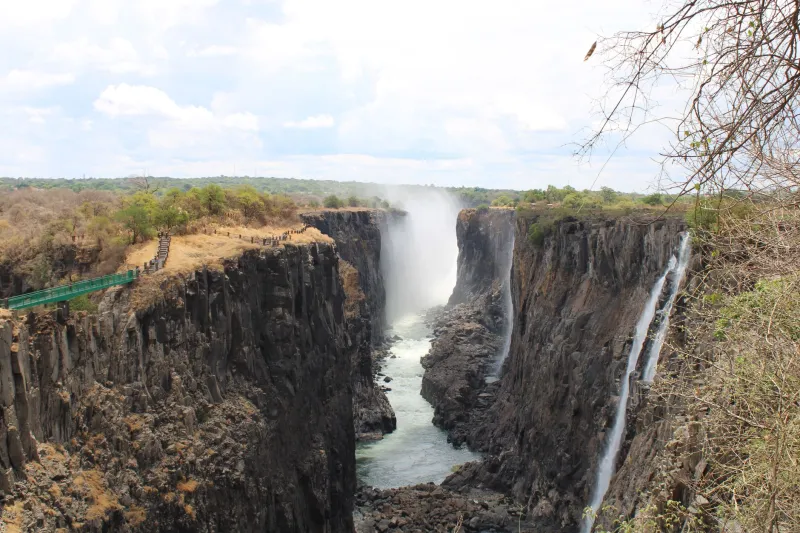
Let's be honest about something. Victoria Falls is a life-changer. Standing at the edge of the world's largest waterfall—mist soaking your jacket, the ground vibrating under your feet, the Zambezi River disappearing into a gorge that looks like the earth just cracked open—is the kind of experience that doesn't have a domestic equivalent. Not really.
But travel is complicated. Budgets are real. International flights are long and expensive. And for a lot of Americans, Zambia is a dream that's currently sitting in the "eventually" column.
So here's a different question: what if you could find experiences closer to home that capture some of that intensity? Not as a replacement—nothing replaces the thunder—but as a way to stay connected to the mindset, to keep the hunger for genuine adventure alive while you plan the real thing?
This is that guide. It's organized around the specific feelings that Victoria Falls tends to produce: awe at raw natural scale, the physical rush of water-based adventure, the quiet that follows real fear, and the sense of being genuinely small in the best possible way.
For the Sheer Scale of It: Niagara Falls, New York/Ontario
Niagara is the obvious comparison, and it's worth addressing directly: no, it's not Victoria Falls. It's smaller in height, more developed around the edges, and significantly more crowded. But here's what Niagara does well—it's genuinely massive, genuinely loud, and genuinely impressive in a way that surprises people who've only seen it in photos.
The Maid of the Mist boat tour puts you close enough to Horseshoe Falls that you'll understand, viscerally, what it means to be near a large volume of moving water. The Cave of the Winds experience on the American side lets you stand on wooden walkways within feet of the Bridal Veil Falls—soaking wet, completely surrounded by sound. For a few minutes, your brain does something similar to what it does at Victoria Falls: it stops its usual chatter and just pays attention.
Niagara is best treated as an appetizer. Go, let it impress you, and let it remind you that waterfalls are worth crossing oceans for.
Practical note: The Canadian side offers better views. Budget around $150–$200 per person for a day trip including boat tours and the Cave of the Winds.
For the Adrenaline: The New River Gorge, West Virginia
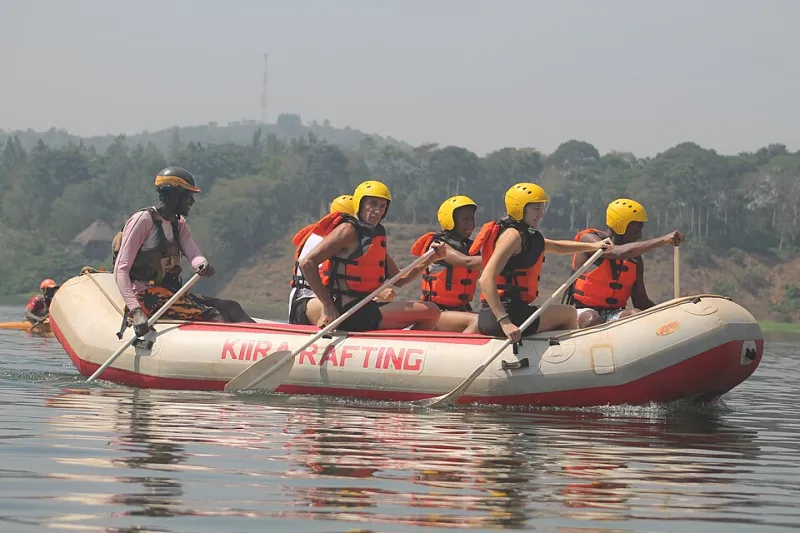
If white-water rafting on the Zambezi below Victoria Falls is on your bucket list—and it should be—the New River Gorge is the closest domestic preparation you're going to find. The Lower New River offers Class III–V rapids through a stunning gorge that was designated a National Park in 2020, and full-day guided rafting trips run through serious water that demands your full attention.
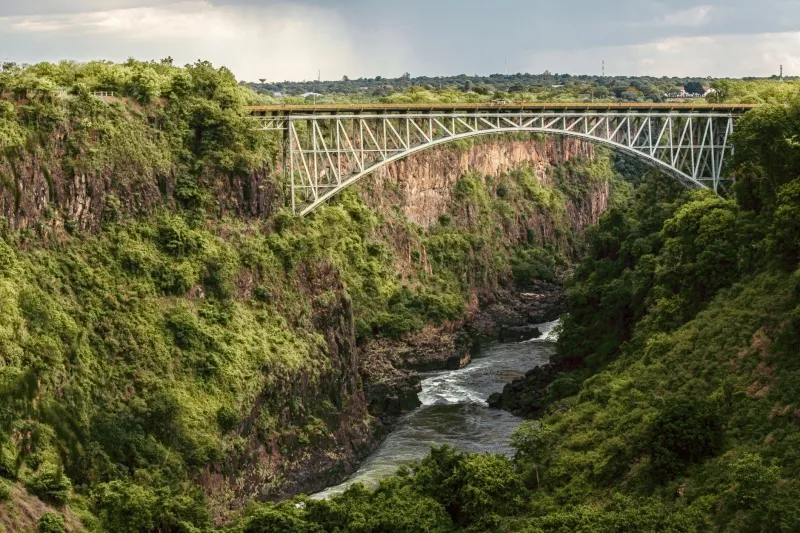
Beyond the river, the gorge itself is an adventure destination in the purest sense. The New River Gorge Bridge hosts an annual Bridge Day festival where BASE jumpers leap from the structure—but year-round, commercial bridge walk tours let you step outside the safety railing and walk the catwalk above the gorge. It's not a bungee jump off the Victoria Falls Bridge, but your palms will sweat in a way that feels familiar.
Climbing, zip-lining, and mountain biking round out the options. The area has seen serious investment in adventure infrastructure over the last decade, and it delivers.
Practical note: Rafting trips run $80–$130 per person for a full day. The gorge is within driving distance of Washington D.C., Pittsburgh, and Charlotte.
For the Wilderness Feeling: Olympic National Park, Washington State
One of the specific things that Victoria Falls does is place you inside an ecosystem that feels genuinely alive—the rainforest that grows in the mist zone, the birds, the smell of wet vegetation, the sense that you're a visitor in something much older than you. Olympic National Park in Washington State offers the closest domestic approximation of that feeling.
The Hoh Rain Forest, on the park's western side, receives up to 14 feet of rain per year. The result is a temperate rainforest so dense and so green that first-time visitors often stop in their tracks. Massive Sitka spruce trees draped in moss, elk wandering through the understory, rivers running glacial blue—it's a different kind of awe than the falls, but it's genuine awe.
The park also includes rugged Pacific coastline and glacier-capped peaks, making it one of the most ecologically diverse protected areas in the country. Spend three days here and you'll remember what it feels like to be small.
Practical note: The park entrance fee is $35 per vehicle. Camping is available throughout the park; budget lodges start around $100 per night in nearby Forks or Port Angeles.
For the Pure Fear Factor: Moab, Utah
Moab is where Americans go when they want to be genuinely scared in a beautiful place. The combination of canyon country, the Colorado River, and a well-developed adventure tourism industry means you can pack multiple terrifying experiences into a single long weekend.
The highlight for Victoria Falls comparison purposes: canyoneering. Guided canyoneering trips in the Moab area involve rappelling down sandstone slot canyons, swimming through cold water pockets, and squeezing through passages that demand complete trust in your equipment and your guide. The disorientation—the sense of being inside the earth, surrounded by ancient rock, reliant on your own nerve—is genuinely similar to what happens in the Victoria Falls gorge.
Add a day of white-water rafting on the Colorado through Cataract Canyon (Class IV–V in high water) and you've got a weekend that will recalibrate your sense of what you're capable of.
Practical note: Canyoneering day trips run $100–$180 per person. Moab is a 4-hour drive from Salt Lake City or Denver.
The Honest Comparison
Here's what none of these destinations can give you: the specific, irreplaceable experience of standing at Victoria Falls itself. The scale is different. The sound is different. The mist is different. The feeling of being at one of the seven natural wonders of the world, in southern Africa, on the edge of the Zambezi—that's not something that translates.
What these North American adventures can do is keep the appetite sharp. They can remind you that adventure travel is worth prioritizing, that the physical rush of real wilderness is something your body and brain genuinely need, and that the world is full of places that will demand your full presence.
Use them as training. Use them as motivation. And when you're finally ready to hear the thunder for yourself—when Zambia moves from the "eventually" column to the "booked" column—you'll arrive already knowing who you are when you're standing at an edge.
That's not a bad way to show up.