The Waterfall That Rewires You: Finding Your Edge at Victoria Falls
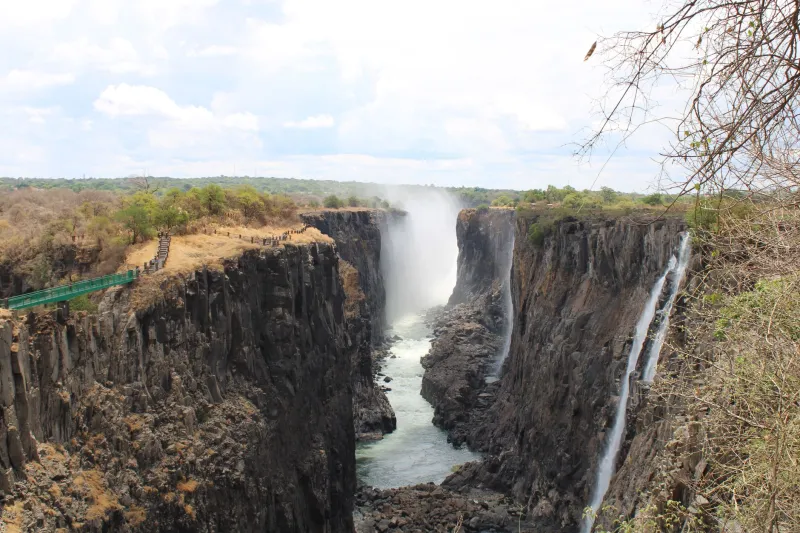
There's a particular kind of American comfort that's hard to notice until it's gone. It shows up in the way we schedule everything, the way we prefer our adventures pre-packaged and liability-waivered, the way we've quietly agreed — somewhere between the suburbs and the streaming services — that the world is a place to be managed rather than experienced. Then you stand at the edge of Victoria Falls, and all of that dissolves in about thirty seconds flat.
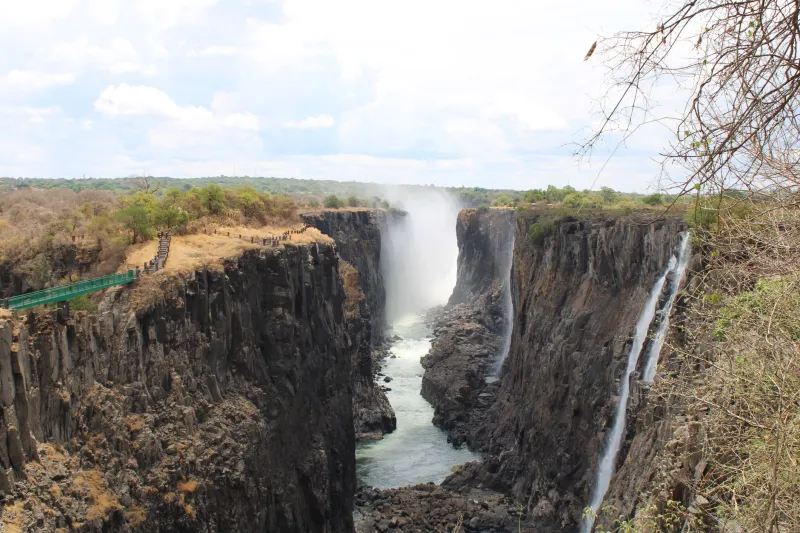
The spray hits you before you even see the drop. The sound — a low, bone-deep roar that the local Kololo people called Mosi-oa-Tunya, the Smoke That Thunders — registers somewhere deeper than your ears. And suddenly the carefully constructed version of yourself, the one that knows exactly how much risk to take on and when, feels strangely small.
That's not a bug. That's the whole point.
Why Americans Struggle With Unscripted Risk
We're not a fearless culture, despite what the action movies suggest. We're a culture that's gotten very good at simulating fearlessness in controlled environments. We have rock climbing gyms with padded floors. We have roller coasters with six-point harnesses and height requirements. We have hiking trails with cell service and trailhead parking lots.
None of that is bad. But it does mean that a lot of Americans arrive at Victoria Falls having never genuinely reckoned with something that doesn't care whether they're comfortable. The Falls don't adjust for your experience level. The Zambezi River doesn't check your fitness tracker. The cliff edge is the cliff edge, whether you're ready or not.
That confrontation — between who you thought you were and what the world is actually asking of you — is where something interesting starts to happen.
The Abseil That Changes Everything
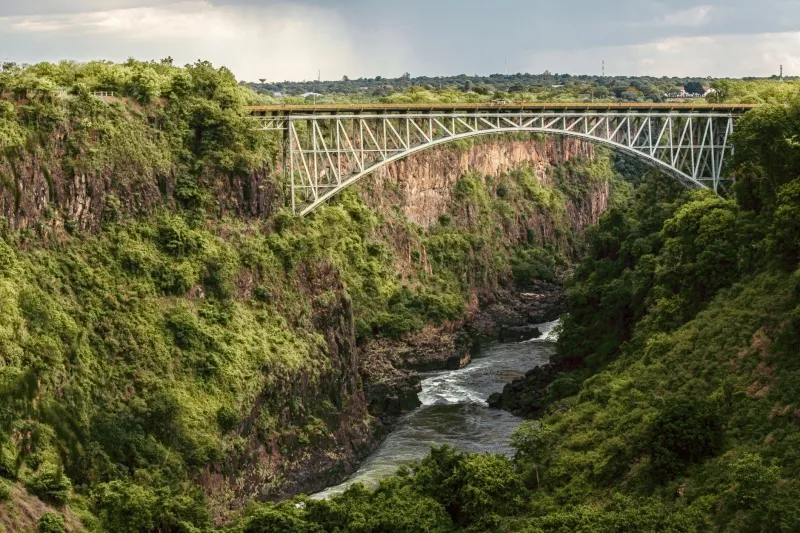
Abseiling down the walls of the Batoka Gorge is one of those activities that sounds manageable until you're actually doing it. The descent drops you alongside ancient basalt rock face, the river churning far below, mist rising from the Falls just upstream. Guides are experienced, gear is solid, and the setup is as safe as this kind of thing gets.
But safe doesn't mean easy. Safe doesn't mean your hands won't shake on the rope. Safe doesn't mean the voice in your head — the one that's been keeping you in your lane for thirty-odd years — will suddenly go quiet.
What most people discover on that rope is that the voice isn't actually as authoritative as it seemed back home. It's loud, sure. But it's not right. You push through it, your feet find the rock, and you descend. And when you reach the bottom, something has shifted. Not dramatically, not permanently, but noticeably. You did the thing the voice said you couldn't.
That's not nothing. That's actually a lot.
You Don't Have to Jump Off Anything
Here's what gets missed in conversations about adventure travel: the transformation doesn't require an extreme sport. Sometimes it just requires proximity.
Standing at Knife Edge Bridge during high water season, when the Falls are fully unleashed and the spray soaks you to the bone within seconds, is its own kind of reckoning. You're not in danger — not really — but your nervous system doesn't entirely believe that. The sound is overwhelming. The scale is disorienting. You feel, in a way that's almost impossible to replicate in daily American life, genuinely small.
And that feeling? It's oddly freeing.
When you're small, the stakes of ordinary embarrassment drop away. The work email you've been dreading, the conversation you've been avoiding, the decision you've been sitting on for six months — none of it carries the same weight after you've stood next to one of the most powerful natural forces on Earth and just... breathed through it.
What the River Teaches About Boundaries
The Zambezi is a study in contrasts. Above the Falls, it runs wide and deceptively calm — the kind of river you'd canoe on a lazy Sunday afternoon. Then it hits the gorge and becomes something else entirely: a churning, class-five nightmare that draws white-water rafters from around the world specifically because of how unforgiving it is.
Same river. Different context. Completely different experience.
There's something worth sitting with there. A lot of us have drawn our personal boundaries based on a single context — the environment we grew up in, the risks we've seen go wrong, the version of ourselves we decided on in our twenties. Victoria Falls has a way of suggesting that those boundaries might be more contextual than we think. That the person who freezes up on a high ropes course at home might be the same person who, with the right guide and the right moment, leans out over the Zambezi and feels something click open.
The Aftermath Nobody Talks About
Travel writers love the moment of triumph. The summit reached, the rapid survived, the photo taken at the edge. What gets discussed less is what happens when you get home.
People who've pushed their comfort zones at Victoria Falls tend to describe a kind of recalibration. The fear doesn't disappear — it never does — but its relationship to action changes. The thing that used to stop you starts to feel more like information and less like a verdict. You've already proven, in a very literal way, that fear and capability can exist at the same time.
That recalibration shows up in small ways. Saying yes to something professionally risky. Having the hard conversation. Signing up for the thing you've been circling for years. It's not that Victoria Falls gave you courage you didn't have. It's that it showed you the courage was already there, waiting for something big enough to call it out.
Planning Your Own Edge-Finding Experience
If this is resonating, the good news is that Victoria Falls on the Zambia side offers a full spectrum of ways to meet your edge — from the genuinely extreme to the quietly profound. First-timers often do well starting with a guided gorge walk or a sunset cruise on the upper Zambezi, where the scale of the environment starts to register without the added pressure of an adrenaline activity. From there, abseiling, zip-lining across the gorge, or a white-water rafting day trip can each serve as their own kind of threshold moment.
The key is to go with a guide who takes safety seriously and reads people well. The best operators at Victoria Falls understand that they're not just running activities — they're holding space for something more personal. Ask questions before you book. Tell them where you're starting from. The good ones will meet you there.
Because here's the thing about the Smoke That Thunders: it's been calling people to their edges for a very long time. You're not the first person to show up a little scared and leave a little changed. You won't be the last.
You just have to get yourself to the edge first.