Shoot the Thunder: A Photographer's Complete Guide to Victoria Falls
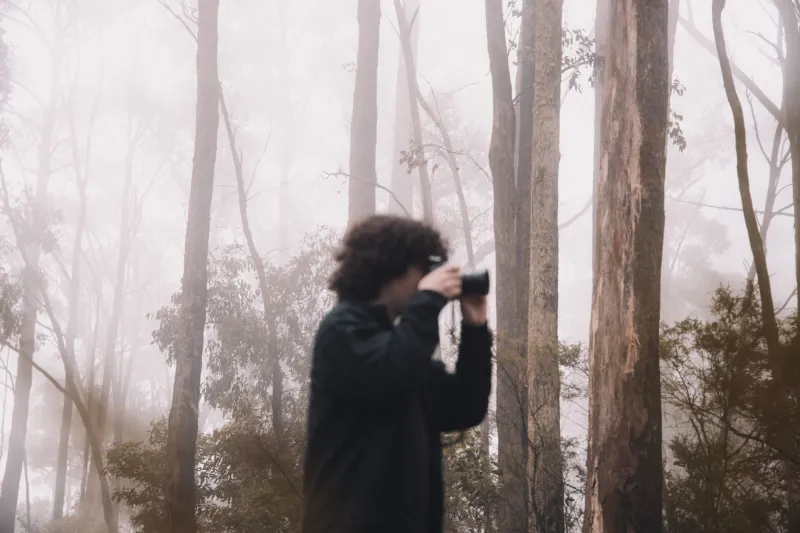
Let's be honest: every phone camera in the world has tried to capture Victoria Falls, and almost every single one has come up short. Not because the photographer lacked talent — but because nothing quite prepares you for the sheer, overwhelming scale of a curtain of water a mile wide dropping 350 feet into a gorge. The mist alone can fill the sky. The sound rattles your chest. And somewhere in all that chaos, there's a photograph worth traveling across the world for.
This guide is for everyone from the iPhone-toting first-timer to the DSLR-slinging semi-pro. Because with the right preparation, the right timing, and a few insider tricks, Victoria Falls doesn't just cooperate — it delivers.
Understand What You're Actually Dealing With
Before you think about f-stops and shutter speeds, understand the environment. Victoria Falls generates a permanent mist cloud that can rise hundreds of feet into the air on high-flow days. That mist is beautiful in photographs — but it's also water, and water destroys camera equipment.
Protect your gear. A waterproof camera bag is non-negotiable. Bring a rain cover for your camera body (LensCoat and Think Tank both make solid options), and carry a pack of microfiber cloths you don't mind sacrificing. Lens cloths will get soaked. Plan for it. If you're shooting with a mirrorless or DSLR, consider bringing a UV filter purely as a sacrificial layer of glass to protect your front element from spray.
Also: bring more memory cards than you think you need. You will shoot more here than anywhere else on your trip.
Timing Is Everything — And Season Changes Everything
Victoria Falls looks dramatically different depending on when you visit, and neither season is wrong — they're just different photographs.
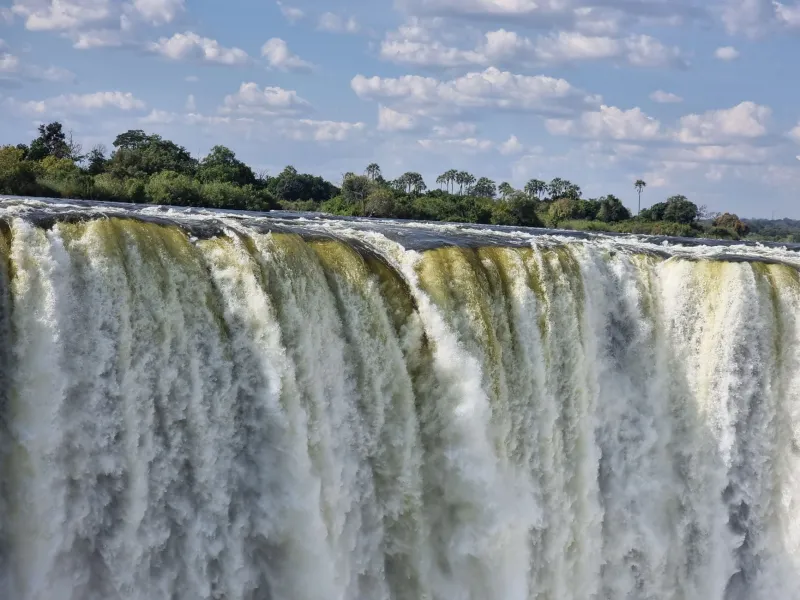
High water (February through May): The Falls are at their most powerful. The mist is so thick that on some days, you literally cannot see the waterfall from the main viewpoints — just a wall of white. Paradoxically, this produces some of the most dramatic images: silhouettes in the mist, figures dwarfed by spray, abstract studies in fog and light. Bring your weather sealing and embrace the chaos.
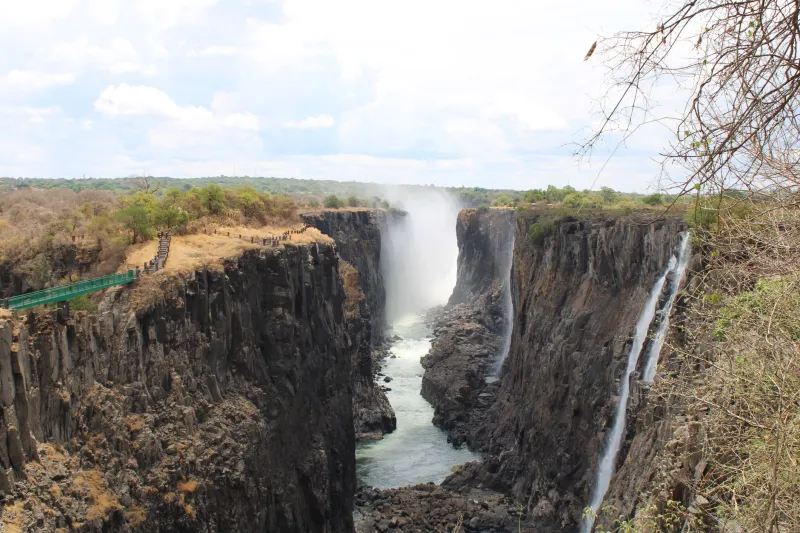
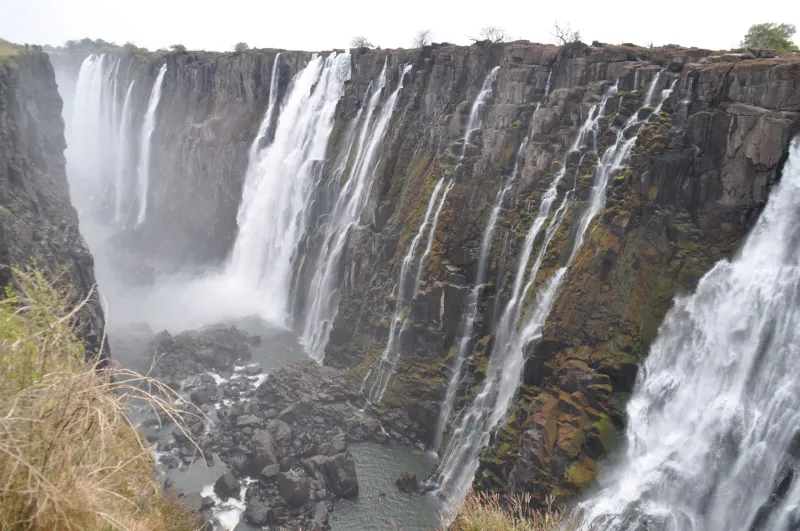
Low water (September through November): The Falls pull back to reveal their full geological structure — the basalt gorge, the layered rock face, the multiple distinct falls. Colors are richer, visibility is clearer, and the famous Victoria Falls rainbows are at their most reliable and vivid. This is prime season for technically clean, classically composed shots.
The shoulder months (June through August): A sweet spot many photographers swear by. Water levels are dropping from peak but still substantial, mist is manageable, and the light during Zambia's dry-season mornings is extraordinary — golden, warm, and long.
Chasing the Rainbow: Timing Your Shots
The rainbows at Victoria Falls are genuinely unlike anything else in the world. On clear days, full double rainbows arc across the gorge, and during full moon periods, lunar rainbows — moonbows — appear at night. Plan around these.
For daytime rainbows, position yourself on the Zambian side of the Falls in the morning, when the sun is behind you and hitting the mist from the east. The Knife-Edge Bridge viewpoint is particularly spectacular for this — you're essentially standing inside the spray zone with the rainbow forming in front of you. Shoot wide to capture the full arc, then zoom in on sections where the color saturation is strongest.
For moonbows, check the lunar calendar before you book. Full moon nights between August and January are your best window. The exposure required is long — typically 20 to 30 seconds at ISO 1600 or higher — so a sturdy tripod is absolutely essential. The results, when they work, are otherworldly.
The Best Vantage Points on the Zambian Side
The Zambian side of the Falls offers access that Zimbabwe simply doesn't match for intimacy and variety.
The Knife-Edge Bridge: Arguably the single best photography location at the Falls. You're suspended above the gorge with the Eastern Cataract on one side and the Boiling Pot on the other. Bring your rain cover — you will get wet.
Livingstone Island: This is as close to the edge as it's legal (and physically possible) to get. Accessed by boat during certain water levels, shooting from Livingstone Island puts you literally at the lip of the Falls. The perspective looking down into the gorge is something no other viewpoint can replicate. Book early — access is limited and seasonal.
The Main Viewpoints (Mosi-oa-Tunya National Park): The series of numbered viewpoints along the park path give you different angles across the full width of the Falls. Viewpoint 16 — the furthest downstream — is often overlooked but offers a sweeping compositional view of the gorge that works beautifully at golden hour.
The Helicopter and Ultralight: If budget allows, aerial photography here is transformative. The "Flight of Angels" helicopter tour gives you a bird's-eye view of the full horseshoe shape of the Falls that ground-level photography simply cannot achieve. Shoot through an open window if possible — glass reflections will ruin your frames.
Camera Settings to Start With
Every scene is different, but here are solid starting points:
- For silky water motion: Shutter speed of 1/4 to 1 second, f/11, ISO 100. Use a tripod and neutral density filter if shooting in daylight.
- For frozen water drama: Shutter speed of 1/500 or faster, f/5.6, ISO 400–800.
- For rainbows: Expose for the highlights in the mist, not the sky. A polarizing filter will dramatically increase color saturation — rotate it until the rainbow pops.
- For moonbows: 25–30 seconds, f/2.8 or widest available, ISO 1600–3200. Bracket your exposures.
Shoot RAW if your camera supports it. The dynamic range at Victoria Falls — bright sky, dark gorge, white mist — is extreme, and RAW files give you the recovery latitude that JPEGs simply don't.
The Shot Nobody Takes (But Should)
Everyone photographs the Falls looking outward. Almost nobody photographs the people watching them.
Turn around. The expressions on faces seeing Victoria Falls for the first time — the dropped jaws, the instinctive reach for a partner's hand, the children pressing against the railing — tell a story that the waterfall alone cannot. Environmental portraiture with the Falls as backdrop is consistently some of the most emotionally resonant work that comes out of this place.
Ask permission, be respectful, and keep your lens cap on until someone says yes. But don't miss it.
One Last Piece of Advice
Put the camera down for at least a few minutes. Seriously. Victoria Falls has been photographed millions of times, and your best images will come after you've actually experienced it — felt the spray, heard the thunder, stood at the edge and understood what you're looking at. The photographers who come home with the most compelling work aren't the ones who shot the most frames. They're the ones who understood what they were standing in front of.