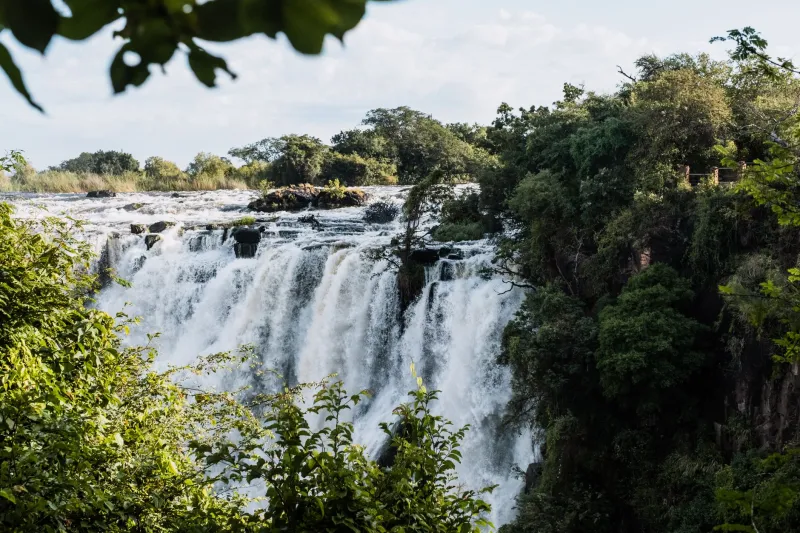
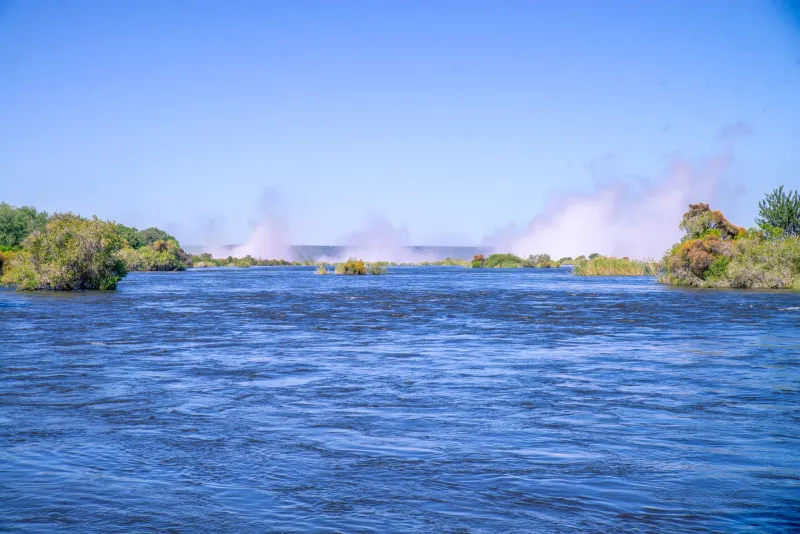
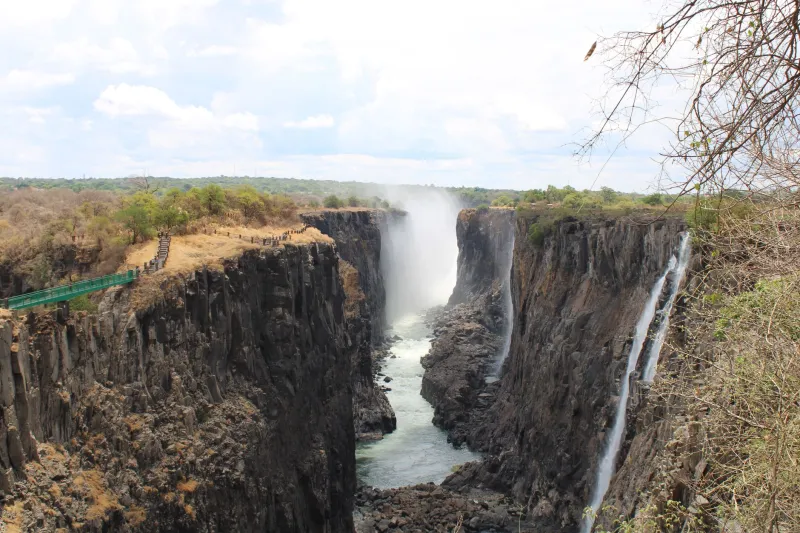
How Your Victoria Falls Vacation Is Helping Save Southern Africa's Wildlife
There's a moment — usually somewhere between your first glimpse of the mist rising above Mosi-oa-Tunya and the low rumble you feel in your chest before you even hear the falls — when Victoria Falls stops feeling like a destination and starts feeling like something alive. That instinct isn't wrong. This place breathes. It roars. And increasingly, it fights.
Behind the adventure packages and the sunset cruises and the bungee jumping, a quieter story is unfolding along the Zambezi River. Victoria Falls has become an unlikely engine for conservation across Southern Africa — and the tourists who show up with their cameras and hiking boots are, whether they realize it or not, a critical part of that engine.
The Money Trail: From Your Booking to the Bush
Zambia's tourism sector contributes roughly 7% of the country's GDP, and a significant portion of that flows directly through the Victoria Falls corridor. But what happens to that money after it lands?
A growing number of lodges, tour operators, and national parks authorities in the region have formalized conservation levies — small fees built into accommodation rates and activity pricing that fund everything from anti-poaching patrols to wildlife veterinary care. Zambia's Department of National Parks and Wildlife (DNPW) receives a portion of park entry fees that goes toward ranger salaries and habitat monitoring programs.
The Mosi-oa-Tunya National Park, which hugs the Zambian side of the falls, is a compact but ecologically significant reserve. Despite covering just 66 square kilometers, it shelters white rhinos — one of the region's most endangered megafauna — under 24-hour armed guard. Those guards are funded, in part, by the visitors who pay to walk the gorge trail or take a guided wildlife drive through the park.
"People come for the falls," says one senior conservation officer who has worked in the Livingstone region for over a decade. "But they leave having contributed to something much larger than a waterfall. That connection matters — for the animals and for us."
The Rhino Comeback: A Cautious Success Story
Few conservation narratives in Zambia carry more weight right now than the white rhino recovery effort at Mosi-oa-Tunya. The species was locally extinct in Zambia for years before a reintroduction program brought a small founding population back to the park. Today, that population has grown — slowly, carefully, with every individual tracked and protected.
It's not a guaranteed success. Poaching pressure across Southern Africa remains intense, driven by international demand for rhino horn. But the combination of tourism revenue, international NGO support, and community buy-in has created a protective web around these animals that wouldn't be possible without the economic argument that living wildlife makes more money than dead wildlife.
For American visitors, this might sound abstract — but consider it this way: the game drive you book for $80 generates enough downstream economic activity to justify keeping rangers in the field year-round. The math, conservationists argue, is that simple.
Communities at the Center
Conservation that ignores the people living alongside wildlife tends to fail. It's a lesson Southern Africa learned the hard way over decades of top-down, exclusionary park management that bred resentment and, ultimately, poaching.
The model being built around Victoria Falls looks different. Community-based natural resource management (CBNRM) programs in Zambia give local villages formal stakes in the wildlife that moves through their land. When a community earns revenue from a photographic safari operator or a walking trail that crosses their territory, they have a direct financial reason to protect the animals rather than compete with them.
In the Livingstone area, several community trusts have used tourism income to build schools, fund boreholes, and establish small business cooperatives. The logic is straightforward: a community that benefits from tourism has every reason to want the ecosystem — and the animals that draw visitors — to thrive.
"The falls bring people here," explains one community development coordinator working near Livingstone. "But it's the elephants, the hippos, the birds — all of it together — that keeps them coming back. Our community understands that now in a way that wasn't always true."
The Elephant in the Room — Literally
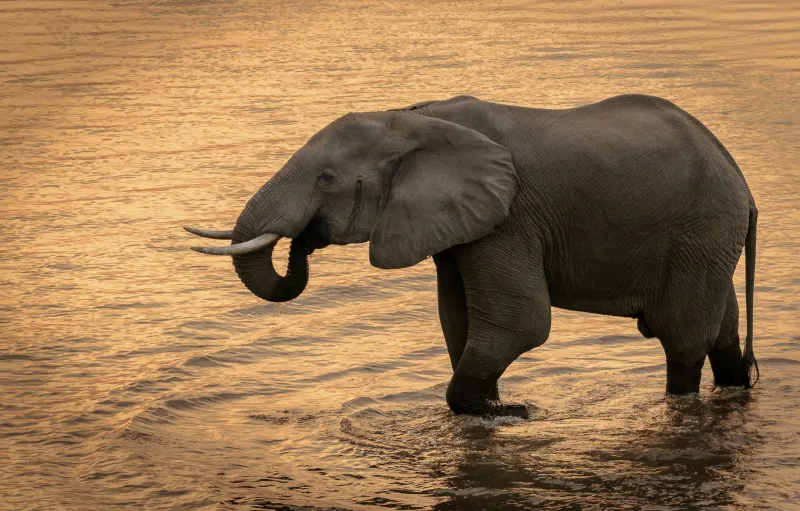
Zambia is part of the Kavango-Zambezi Transfrontier Conservation Area (KAZA), the world's largest transboundary conservation zone, spanning five countries and nearly 200,000 square miles. Within this corridor, elephant populations move freely across borders — and their numbers have rebounded significantly over the past two decades.
That success brings its own complications. Human-wildlife conflict is real and growing in communities along elephant migration routes. Crop raiding by elephants can devastate a small farm family's entire harvest. Conservation organizations operating near Victoria Falls are increasingly focused on mitigation strategies — beehive fences, chili barriers, rapid-response teams — that protect both people and animals.
Some of the funding for these programs traces back to the tourism economy. Conservation-focused lodges often contribute directly to human-wildlife conflict funds as part of their operating philosophy. When you choose a lodge that markets itself as conservation-minded, it's worth asking what that actually means in practice — the good ones will tell you exactly where the money goes.
What Travelers Can Actually Do
You don't have to be a wildlife biologist or a major donor to make a difference here. The choices you make when planning a Victoria Falls trip have real downstream effects.
Choose operators with verified conservation commitments. Look for lodges and tour companies that are members of the Zambia Tourism Agency's responsible tourism framework or that publish transparent reports on their conservation contributions.
Opt for activities that support community programs. Village visits, community-run craft markets, and locally guided cultural tours put money directly into the hands of families who live alongside the wildlife.
Pay the park fees — and pay them gladly. Entry fees to Mosi-oa-Tunya National Park aren't just a bureaucratic formality. They're a conservation contribution.
Ask questions. The best guides in the Livingstone area are walking encyclopedias of local ecology and conservation history. Ask them about the rhinos. Ask about the elephant corridors. Ask what's changed in the past ten years. The answers will almost certainly change how you see the place.
A Natural Wonder Worth Protecting
Victoria Falls has been drawing travelers since David Livingstone first described it to the outside world in 1855. For most of that time, the relationship between tourism and conservation was either nonexistent or actively harmful. The extraction economy — hunting, logging, unregulated development — took far more than it gave back.
What's happening now feels genuinely different. It's imperfect, and the pressures on this ecosystem — climate variability, population growth, global markets for wildlife products — are not going away. But the framework being built around Victoria Falls, one that ties economic prosperity to ecological health, represents something worth paying attention to.
When you stand at the edge of the gorge and feel that mist on your face and hear the thunder of all that water falling into the earth, you're experiencing one of the planet's great spectacles. And somewhere out in the bush behind you, a white rhino is grazing under the watch of a ranger whose salary, in some small but real way, you helped pay.
That's not a bad deal for anybody.