Crowd-Free and Cash-Smart: The Insider Case for Experiencing Victoria Falls from the Zambia Side

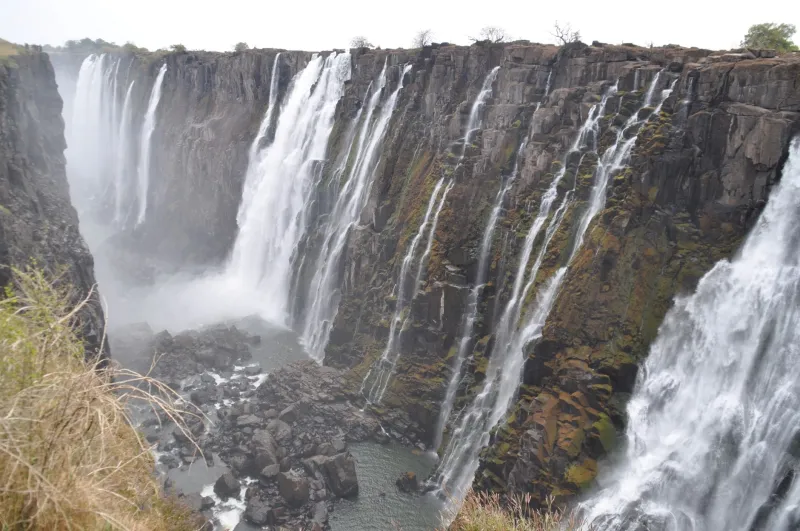
Photo: Diego Delso, CC BY-SA 4.0, via Wikimedia Commons
There's a postcard you've probably seen a hundred times. It shows Victoria Falls framed perfectly, mist rising like smoke from a cathedral, the Zambezi River disappearing into the gorge below. That shot? It's taken from the Zimbabwe side. And because of it, thousands of tourists every year cross the border, snap the photo, and head home thinking they've seen the falls.
They've seen a version of the falls.
Travelers who base themselves in Zambia—specifically in Livingstone, the town that sits just a short drive from the eastern cataract—will tell you something different. They'll tell you about mornings when the trail felt like their own private jungle, about gorge views that made their knees shake, and about guides who knew which rock to stand on to feel the full force of the spray. They'll also tell you they paid less for it.
Here's the case for the Zambia side, built on specifics.
The Walking Trails Nobody's Talking About
The Mosi-oa-Tunya National Park, which protects the Zambian section of the falls, includes a network of walking paths that wind through genuine rainforest. Unlike the more structured walkways on the Zimbabwe side, these trails feel rawer—muddy in the wet season, dappled with light in the dry months, and almost always quiet.
The Knife-Edge Bridge trail is the one that gets mentioned in guidebooks, and for good reason: the suspension footbridge delivers a face-full of mist and a view straight into the churning main gorge that no photograph can honestly prepare you for. But fewer visitors push further along the eastern bank to the viewpoints near Danger Point, where the crowds thin out entirely and the angle on the falls shifts in a way that feels almost architectural—like you're looking at the whole structure from behind.
For those willing to walk a little further, local guides can take you along the lip of the gorge on routes that aren't marked on any tourist map. These aren't reckless excursions—they're the kind of walks that rangers and experienced local operators have been running for years, quietly, for guests who asked the right questions.
Livingstone: A Base That Works Harder for You
Livingstone is one of those towns that travel writers keep calling "charming" and then failing to explain. So here's a more useful description: it's a functioning Zambian town with a genuine local economy, excellent mid-range accommodation, a handful of world-class lodges, and a high street where you can buy a grilled corn cob from a vendor and then walk into a travel agency to book a white-water rafting trip on the same afternoon.
The accommodation options near the Zambian falls entrance range from well-run backpacker hostels charging around $25–$40 per night all the way up to luxury river lodges where you fall asleep to the sound of hippos. Mid-range guesthouses with breakfast included regularly come in under $100 per night—a figure that buys you a lot less on the Zimbabwe side, particularly during peak season.
Many of these properties are family-run, which matters for a specific reason: the staff know the area in ways that large hotel chains simply don't. Ask your guesthouse owner which guide they'd send their cousin to for a sunset boat cruise, and you'll get a name, a phone number, and a discount introduction. That's not something the concierge at a five-star lodge can replicate.
Exclusive Adventures You Can Only Access from This Side
Here's where Zambia genuinely pulls ahead. Several of the most distinctive adventure experiences at Victoria Falls are only available—or significantly better—from the Zambian side.
Devil's Pool. This natural infinity pool sits at the very lip of the main falls, separated from the drop by a submerged rock ledge. You can swim in it. During low-water season (roughly August through December), licensed operators run guided swims out to the pool from Livingstone Island on the Zambian bank. It's one of the most surreal experiences on earth, and it's only accessible from this side.
White-Water Rafting on the Zambezi. The rapids below the falls—starting from the Boiling Pot at the base of the gorge—are accessed via the Zambian bank. The hike down is steep and memorable, and the rafting itself covers some of the most technically challenging commercial white-water on the planet. Operators based in Livingstone run full-day trips that include lunch on the river bank, and the pricing is generally more competitive than equivalent packages booked from Zimbabwean operators.
Gorge Swinging and Abseil Operations. A number of adrenaline operators have set up on the Zambian side of the gorge, offering abseils, gorge swings, and zip-line experiences that put you directly above the churning water. Because these operators compete for a smaller tourist pool than their counterparts across the border, prices tend to be sharper and booking is easier.
The Crowd Equation
This is simple math. The Zimbabwe side draws more visitors—partly due to its proximity to Victoria Falls town (a more developed tourist hub), partly due to the iconic viewpoints, and partly due to inertia. People go where people have always gone.
The result is that on a busy day, the Zimbabwean walkways can feel genuinely crowded. Selfie sticks, tour groups, and the general bustle of mass tourism are part of the experience. On the Zambian side, even during peak season, it's common to find stretches of trail where you're completely alone with the sound of the falls.
For travelers who came all this way to feel something—to actually stand at the edge of one of the world's great natural wonders and let it hit them—that silence matters enormously.
A Practical Note on Crossing Over
Choosing Zambia as your base doesn't mean you're locked out of Zimbabwe's viewpoints. A day trip across the border is straightforward, and most travelers do it. The Zambia-Zimbabwe border crossing at the Victoria Falls Bridge is one of the easier international border experiences in Africa, and the UNIVISA (available to citizens of participating countries, though Americans should check current requirements before travel) allows entry to both countries on a single document.
The smarter play is to sleep on the Zambian side, use Livingstone as your operational headquarters, and cross into Zimbabwe for a half-day to catch the classic viewpoints. You get the best of both experiences without paying Zimbabwe's higher accommodation rates.
The Zambia side isn't a consolation prize. It's the choice that people who've done their research tend to make—and the one they tend to recommend when they get home.