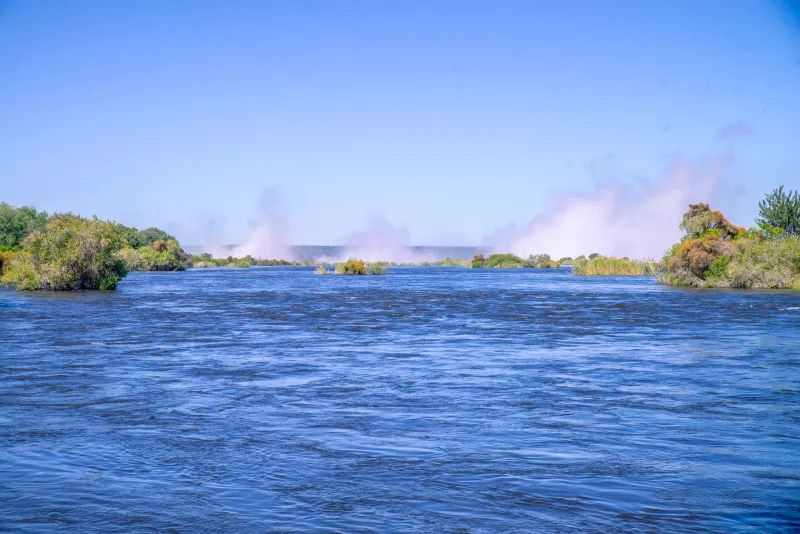
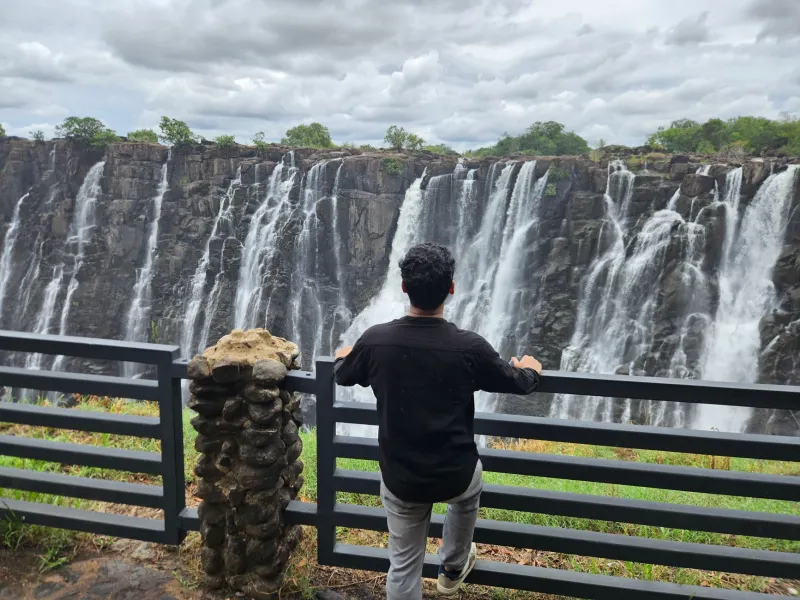
Standing at the Edge: How Victoria Falls Rewires Your Relationship With Fear and the Choices You've Been Avoiding
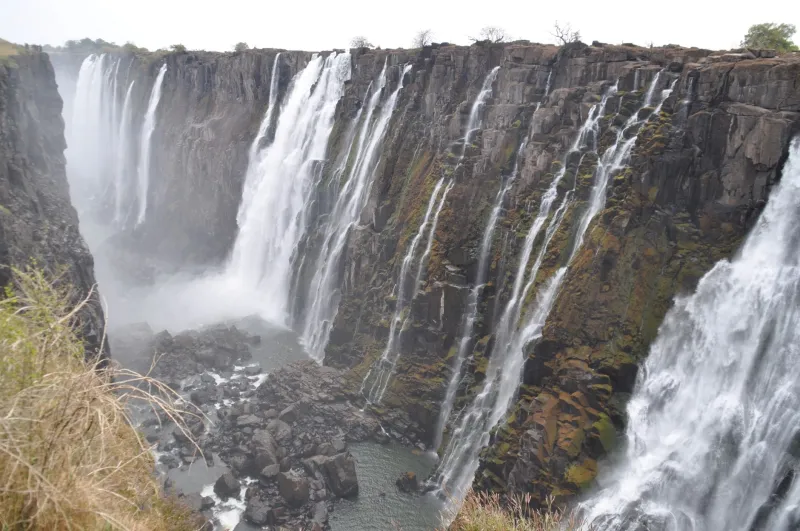
There's a moment — and almost every visitor to Victoria Falls describes it in some version of the same language — when the noise gets so big it fills every corner of your mind and the ordinary mental chatter just stops. The Falls are louder than you expected. The mist is wetter. The drop is more vertiginous. And somewhere in that sensory overwhelm, something shifts.
We talked to returning travelers, dug into what behavioral researchers have to say about awe and decision-making, and spent time listening to the guides who watch this happen to visitors every single week. What we found is that Victoria Falls doesn't just take your breath away. For a surprising number of people, it takes away the excuses, too.
When Nature Outscales Your Anxiety
Jennifer Calloway, a 38-year-old marketing director from Denver, visited Victoria Falls on what she describes as a "consolation trip" after a professional setback. She wasn't expecting anything transformative. She got on the plane mostly to get out of her own head.
"I'd been circling this decision to leave my company and start something on my own for almost two years," she says. "I had spreadsheets. I had risk assessments. I had talked myself out of it probably a hundred times."
Then she stood at Knife Edge Point on the Zambia side, where the gorge narrows and the full force of the Zambezi's plunge becomes almost physical in its intensity. "The Falls didn't care about my spreadsheet," she says, laughing. "That sounds ridiculous, but that's genuinely what I thought. This thing has been doing this for hundreds of thousands of years. It doesn't negotiate with fear."
Six weeks after returning home, she handed in her notice.
Her story isn't unusual. It's practically a genre at this point.
The Psychology of Awe — and Why the Falls Deliver It So Completely
Researchers who study awe — that specific emotional cocktail of vastness, wonder, and the feeling that you're in the presence of something that exceeds your mental frameworks — have found that it does something genuinely interesting to human cognition. It shrinks what psychologists call the "default self," that constant internal narrator that keeps score, catalogs grievances, and rehearses worst-case scenarios.
Victoria Falls is, by almost any measure, a near-perfect awe delivery mechanism. It's one of the largest waterfalls on Earth. The spray rises high enough to be visible from miles away. The sound registers as a physical sensation in your chest. Standing at the Boiling Pot or along the rainforest path that runs parallel to the Falls, you are simply not capable of thinking about your mortgage at full volume.
And when that mental noise quiets, something else gets a chance to surface. Clarity. Or at least something that feels like it.
"People come here burned out," says one veteran Zambian guide who has led Falls tours for over a decade. "They come here exhausted from deciding things. And then they stand in front of something that has never once needed to decide anything, and they remember what it feels like to just know."
Regret in Reverse
Not every shift is about launching a business or quitting a job. Some of what Victoria Falls seems to surface is quieter but no less significant.
Marcus Thibodeau, a 52-year-old high school teacher from outside Atlanta, visited as part of a group trip he almost didn't book. He'd been telling himself for years that a trip like this was something he'd do "someday." His youngest child leaving for college finally pushed him to go.
"I kept thinking about all the somedays I'd already used up," he says. "Standing there, watching water that's been falling for longer than humans have existed — it made the word 'someday' feel kind of embarrassing."
He came home and booked a solo trip to Patagonia. He also called his brother, with whom he'd had a falling-out years earlier. "I don't know exactly how those two things are connected," he admits. "But they are."
Behavioral economists who study regret have long noted that people tend to regret inaction more than action over the long run. The things we didn't say, the trips we didn't take, the risks we didn't accept. Victoria Falls, with its ancient indifference to human hesitation, has a way of making that asymmetry feel suddenly, viscerally real.
Is It Real, or Is It Vacation Brain?
Fair question. Transformative travel experiences are notoriously slippery. You come home certain you've changed, and three weeks later you're back in the same routines, the same loops, the same half-made decisions.
Some of what people feel at Victoria Falls is almost certainly the clean-slate effect of being far from home, disconnected from daily pressures, and physically stimulated in ways that everyday life rarely provides. Vacation clarity is real — and it's also temporary if you don't do anything with it.
But the visitors who seem to carry something lasting back with them tend to share a common thread: they didn't just feel the feeling at the Falls. They named it. They wrote it down. They made one concrete commitment — even a small one — before they left Zambia.
"The Falls gives you the window," says Calloway. "You still have to walk through it yourself."
What to Do With the Feeling Before You Leave
If you're planning a trip to Victoria Falls and you want to come home with more than great photos, a few intentional habits can help anchor whatever the Falls stirs up in you.
Bring a journal and use it at the water's edge, not back at the lodge. The physical proximity matters. Write down not just what you see but what you've been avoiding thinking about. Give yourself permission to be honest in a way that the noise of ordinary life rarely allows.
Take the slower routes — the rainforest walk, the sunset cruise on the Zambezi, the early-morning gorge hike before the tour buses arrive. Awe compounds with time and quiet. The more you let the Falls work on you, the more it has to offer.
And when you get home, don't wait for the feeling to return on its own. Act on one thing within the first two weeks. It doesn't have to be dramatic. It just has to be real.
The Smoke That Thunders has been falling for a very long time. It's not waiting for you to be ready. Maybe that's the whole point.